

Contenido
When I first started tracking European gambling markets in 2017, online represented barely a quarter of total gambling revenue on the continent. The shift since then has been steady, accelerating, and — as of 2025 — approaching a milestone that changes how the industry thinks about itself. The European gambling market reached 123.4 billion euros in gross gaming revenue in 2024, with a 5% annual increase. Online channels accounted for 39% of that total — 47.9 billion euros — and were projected to cross the 40% threshold in 2025. Maarten Haijer, Secretary General of the European Gaming and Betting Association, called this significant, noting that while land-based gambling remains dominant, online channels are showing stronger momentum.
Total Market and Online Share: The Numbers Behind the 40% Milestone
The 40% figure matters because it represents the point where online gambling stops being a secondary channel and becomes an equal partner in the European gambling ecosystem. At 47.9 billion euros, the European online gambling market is larger than the entire gambling markets of most individual countries worldwide. The European online gambling market reached 45.7 billion dollars in 2025 and is projected to reach 78.8 billion dollars by 2034, representing a CAGR of 6.05%.

This growth isn’t uniform across the continent. Northern European markets — particularly Scandinavia and the UK — have already crossed the 50% online threshold. Southern and Eastern European markets are catching up but remain more land-based-dominant. The aggregate 40% figure masks significant regional variation, and understanding where different markets sit on the transition curve tells you a lot about where regulatory pressure and offshore competition will intensify next.
EGBA members — the major licensed operators who belong to the European Gaming and Betting Association — collectively hold 321 licences across 21 European countries. Their combined GGR reached 13.5 billion euros in 2024, a 15% increase. These operators represent the organised, multi-jurisdiction segment of the market. Below them sits a long tail of smaller operators, single-market licensees, and — at the bottom — the unlicensed offshore sector that operates outside every regulatory framework.

The regulated segment’s growth has been driven partly by market maturation and partly by post-pandemic behavioural shifts. Players who discovered online gambling during lockdown periods didn’t fully return to land-based venues when restrictions lifted. The convenience factor — gambling from home, during a commute, or during a work break — creates a stickiness that land-based operators can’t replicate. The result is a structural transfer of revenue from physical to digital channels that shows no sign of reversing, even as land-based venues recover their pre-pandemic footfall.
Mobile Gambling at 58% of Online Revenue
I remember the first mobile gambling apps I tested — clunky, slow, with game catalogues a fraction of what the desktop sites offered. That was a different era. Mobile devices generated 58% of online gambling revenue in Europe in 2024, up from 56% in 2023. The trajectory is clear and irreversible: mobile is becoming the primary access point for online gambling, and the desktop experience is increasingly secondary.

This shift has implications for the offshore market. Mobile gambling is inherently more impulsive — sessions happen during commutes, breaks, waiting times — and the offshore casinos that optimise for mobile experience capture players in moments of low resistance. At the same time, mobile platform policies create friction for offshore operators: Apple and Google don’t list unlicensed gambling apps in their stores. Offshore casinos must rely on browser-based mobile play or APK downloads that bypass app store gatekeeping. The mobile channel simultaneously drives demand and limits distribution for unlicensed operators — a tension that shapes how the offshore market evolves.
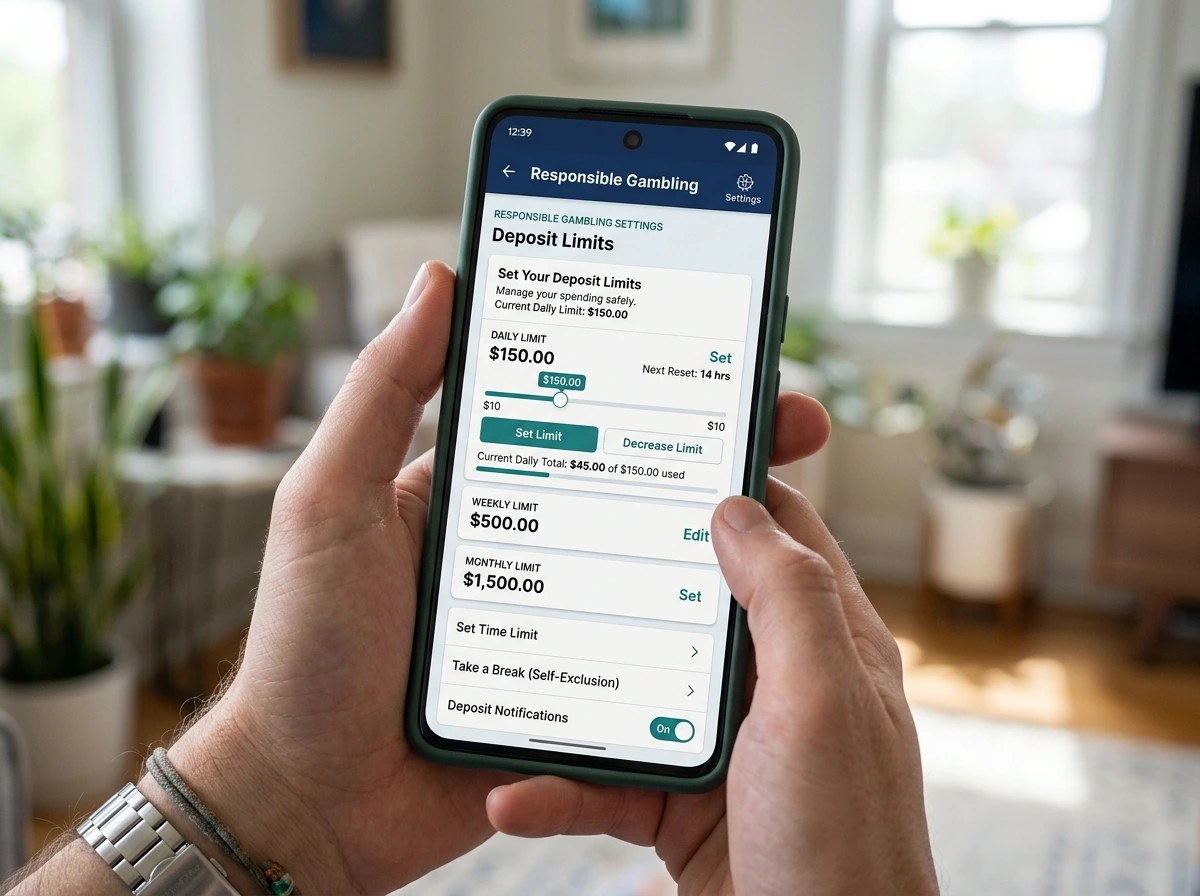
For regulators, the mobile shift means that player protection tools must work seamlessly on small screens. A deposit limit prompt that’s easy to engage with on desktop but buried in a mobile menu is effectively invisible. The DGOJ’s upcoming centralised limit system will need to function as a native mobile experience to be effective, because that’s where the majority of gambling sessions now begin and end.
Spain’s 14.2% Online Penetration: Lowest in Europe
Here’s a number that surprised me when I first saw it: Spain’s online gambling penetration is just 14.2% of total gambling revenue — the lowest in Europe. Compare that to Sweden at 68.3% or Finland at 68.1%. Spain has a large, active land-based gambling sector — casinos, slot bars, lottery outlets — that still dominates the market. The online channel, despite growing 17% annually with GGR reaching 1,700.55 million euros in 2025, remains a small fraction of total gambling activity.

Low online penetration means high growth potential. It also means that Spain’s regulatory framework is managing a market that is still in a relatively early stage of digital transition compared to its European peers. The players who are already online tend to be younger, more digitally native, and more familiar with international platforms — characteristics that correlate with higher offshore exposure. As online penetration grows — and it will, driven by generational change and the broader European trend toward digital channels — Spain’s regulatory framework will face increasing pressure to keep pace with a market that is changing faster than the laws governing it.
The 14.2% figure also contextualises Spain’s offshore problem differently from high-penetration markets. In Sweden or Finland, where the vast majority of gambling is already online, the battle between regulated and unregulated operators plays out on a large, mature digital battlefield. In Spain, the digital gambling market is still forming, and the regulatory decisions made now — deposit limits, advertising rules, enforcement intensity — will determine whether the online market develops primarily within the regulated framework or fragments between licensed and unlicensed operators. The stakes of getting it right are proportionally higher when the market is still taking shape.
FAQ
Why is Spain’s online gambling penetration the lowest in Europe?
Spain has a large and deeply established land-based gambling sector — including casinos, slot bars in hospitality venues, and an extensive lottery network — that continues to attract the majority of gambling spending. Cultural habits, the physical accessibility of land-based gambling, and a regulatory framework that imposes stricter online advertising restrictions than some European peers all contribute to a lower rate of digital transition compared to markets like Sweden or Finland.
What is driving the shift from land-based to online gambling in Europe?
The primary drivers are mobile device adoption, generational change, improved online product quality, and convenience. Mobile devices now generate 58% of European online gambling revenue, enabling sessions during commutes and breaks that land-based venues cannot capture. Younger demographics show a strong preference for digital channels, and the gap between online and land-based product offerings continues to narrow as live dealer games and immersive technologies improve.