


Contenido
Tax is the part of the offshore casino conversation that nobody wants to have. I’ve lost count of the number of players who assumed that because an offshore casino doesn’t report to Spanish authorities, their winnings are invisible to the Agencia Tributaria. They’re wrong, and the consequences of acting on that assumption range from unpleasant to severe. Spanish tax law doesn’t care where you gambled. It cares what you earned.
IRPF Treatment of Gambling Winnings: Section G2 and Net Profit
Gambling winnings in Spain are taxed as part of the IRPF — the Impuesto sobre la Renta de las Personas Físicas, Spain’s personal income tax. They fall under the general tax base, specifically in what’s informally called section G2, which covers gains from gambling and similar activities. The key word is «net»: you’re taxed on net winnings, meaning total winnings minus total losses within the same fiscal year. If you won 5,000 euros and lost 3,000, your taxable gambling income is 2,000 euros.
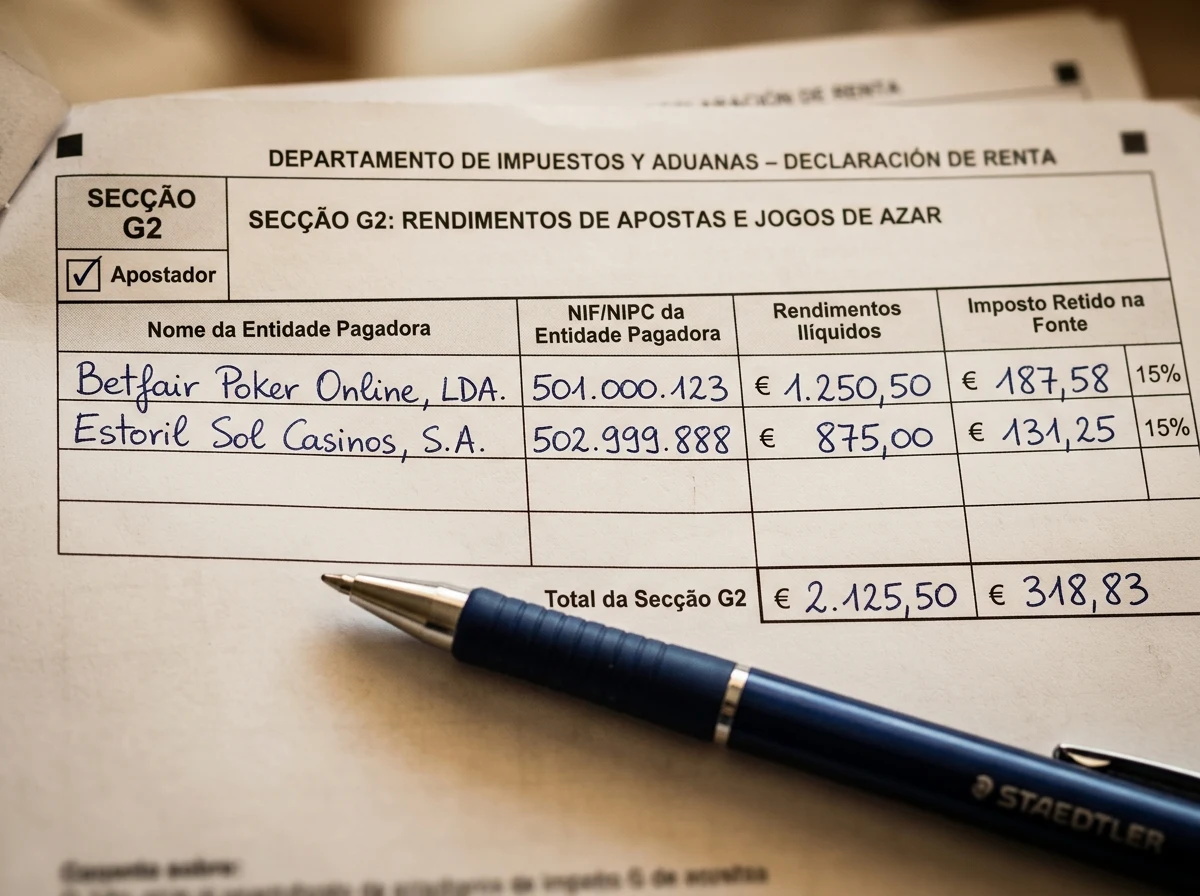
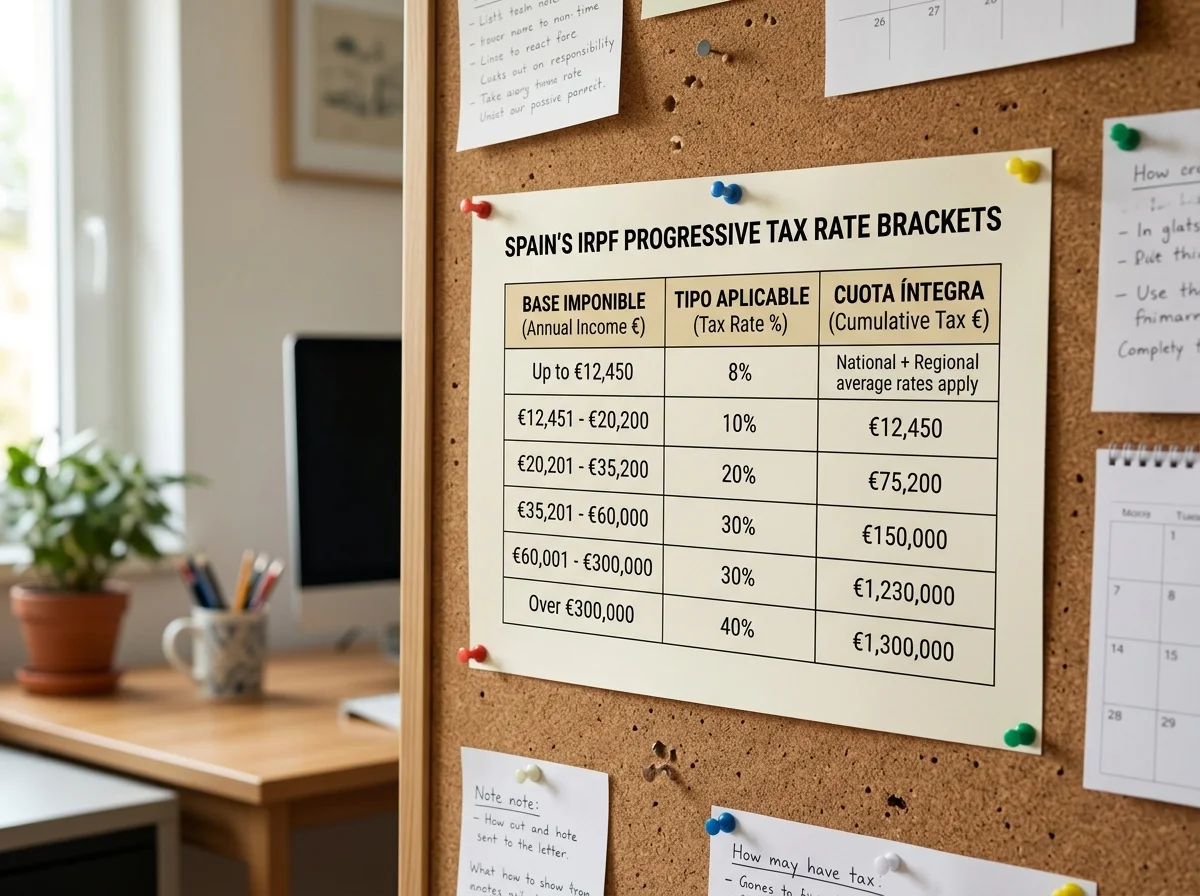
The tax rates follow Spain’s progressive IRPF brackets, which currently range from 19% to 47% depending on your total income. Gambling winnings are added to your other income — salary, investment returns, rental income — and taxed at the marginal rate. For someone already earning a reasonable salary, significant gambling winnings push income into higher brackets, and the effective tax rate on those winnings can be substantial.
Spain’s regulated online gambling GGR reached 1,700.55 million euros in 2025. At DGOJ-licensed casinos, the operator generates annual summaries of your wins and losses, which makes the IRPF calculation straightforward. You know your net position, the operator can provide supporting documentation, and the numbers feed directly into your tax return. The system works because the data exists and is accessible. Offshore casinos break this system at every step.
Why Winnings From Unlicensed Casinos Complicate Tax Filing
The obligation to declare gambling winnings applies regardless of whether the casino holds a DGOJ licence. This is a point I’ve had to repeat in every tax-related conversation I’ve had with players: the taxability of winnings is determined by where you live, not where you gamble. A Spanish resident who wins 10,000 euros at a Curaçao-licensed casino owes exactly the same tax as one who wins 10,000 at a DGOJ-licensed casino.
The complication is documentation. Offshore casinos have no obligation to provide IRPF-compatible summaries. Some do, but most don’t — and the format varies wildly. If you’re playing at a crypto casino, your transaction records are blockchain entries that need to be converted to euros at the exchange rate prevailing on the date of each transaction. If you’ve played at multiple offshore sites over the course of a year, assembling a complete picture of your net gambling position becomes a significant accounting exercise.
The estimated volume of unregulated online gambling in Spain reached 231 million euros in 2024. Some portion of those winnings is presumably being declared, but the documentation challenges mean that accurate reporting is difficult even for players who intend to comply. The burden falls entirely on the player to maintain records that the Agencia Tributaria will accept as evidence of their gambling activity.
There’s an additional wrinkle for crypto gambling. If you deposit Bitcoin at an offshore casino, play, and withdraw in Bitcoin, the Agencia Tributaria may treat the transaction as involving two taxable events: the gambling gain or loss, and the capital gain or loss on the cryptocurrency itself. The Bitcoin you deposited may be worth more or less when you withdraw it, and that change in value is a separate tax matter from the gambling outcome. This double layer of tax complexity is unique to crypto gambling and catches many players off guard.

The crypto gambling market is projected to exceed 65 billion dollars by 2026, and a growing share of that volume involves Spanish players. Unlike fiat transactions, which leave clear bank records, crypto transactions create a blockchain trail that requires specialist knowledge to interpret for tax purposes. A player who gambles with stablecoins — pegged to the dollar or euro — avoids some of the capital gains complexity but still needs to document the gambling activity itself. The Agencia Tributaria’s capacity to track crypto transactions is growing, and the assumption that cryptocurrency provides anonymity from tax authorities is increasingly outdated.
Consequences of Not Declaring Offshore Gambling Income
Mikel Arana, the DGOJ’s Director General, has stated clearly that the regulator now has data on credit card payments to all gambling operators and uses that information to check whether payments were made to legal or illegal operators, adding that new strategies for monitoring bitcoin gambling operations are being developed. The Agencia Tributaria receives this data and cross-references it with tax returns. If your bank records show payments to gambling operators but your tax return shows no gambling income, the discrepancy is detectable.

Non-declaration carries escalating consequences. A voluntary late declaration with a small tax due typically results in a surcharge. A deliberate failure to declare significant income triggers penalties ranging from 50% to 150% of the unpaid tax, plus interest. In extreme cases — large amounts, repeated non-declaration, evidence of active concealment — the matter can be referred for criminal prosecution under Spain’s tax fraud provisions.
The practical advice I give to anyone gambling at offshore casinos is simple: keep records as though you were going to be audited, because you might be. Save screenshots of your account balance, transaction history, deposit and withdrawal confirmations, and any correspondence with the operator. If you’re gambling with cryptocurrency, record the euro-equivalent value of every transaction on the date it occurred. And consult a tax professional who understands the specific complications of offshore gambling income, because the intersection of gambling taxation and cryptocurrency taxation is too complex for generic advice to cover safely.
FAQ
Can you offset losses against winnings when calculating gambling tax in Spain?
Yes. Spanish IRPF rules allow you to calculate gambling tax on net winnings — total winnings minus total losses — within the same fiscal year. If your losses exceed your winnings, the net result is zero taxable gambling income for that year, but you cannot carry gambling losses forward to offset winnings in future years. You need documentation to substantiate both wins and losses.
Does the Agencia Tributaria have access to transaction data from offshore casinos?
The Agencia Tributaria does not receive direct reports from offshore operators. However, the DGOJ has stated it has access to credit card payment data for all gambling operators, including illegal ones, and shares relevant information with tax authorities. Bank and payment processor records can reveal transactions to gambling merchants, and discrepancies between these records and declared income can trigger audits.