


Contenido
Every slot game I’ve ever reviewed displays an RTP — return to player — percentage somewhere in its information screen. At a DGOJ-licensed casino, that number has been independently verified by an accredited testing laboratory. At many offshore casinos, the same number appears on the same game, but nobody has checked whether the configured RTP matches what was advertised. That gap between display and verification is one of the least understood risks in offshore gambling.
How RTP Auditing Works at DGOJ-Licensed Operators
When a game provider wants to offer a slot or table game at a DGOJ-licensed casino, the game must be tested and certified by an accredited laboratory. The lab evaluates the game’s random number generator, verifies that the mathematical model produces outcomes consistent with the stated RTP, and checks that the game rules displayed to the player match the game’s actual logic. This certification happens before the game goes live.

The RTP itself is not a guarantee of individual results — it’s a long-term statistical average. A game with a 96% RTP returns 96 euros for every 100 euros wagered over millions of spins. Your individual session might return 200 or zero. But the 96% figure means the game’s mathematics have been verified to converge on that average over time. The operator cannot configure the game to run at a lower RTP than what was certified.
This system creates accountability at multiple levels. The game provider is accountable for the game’s mathematics. The testing lab is accountable for the verification. The operator is accountable for running the certified version. And the DGOJ is accountable for ensuring all three do their jobs. Online casino generated 893 million euros in Spain’s regulated market in 2025, and every euro of that revenue passed through games whose mathematics were independently verified.

The Verification Gap at Offshore Casinos
At an offshore casino, the same game from the same provider may or may not be running the same configuration. Major game providers like Pragmatic Play or Play’n GO maintain consistent RTP settings across all their distribution partners, including offshore ones. The game’s code is served from the provider’s servers, and the operator typically can’t modify it. If you’re playing a Pragmatic Play slot at an offshore casino, the game mathematics are likely identical to those at a DGOJ-licensed casino because the provider controls the software.
The picture changes with lesser-known providers and white-label game platforms. Some smaller providers offer configurable RTP settings — the same game can run at 96%, 94%, or 92% depending on what the operator selects. In a regulated market, the chosen configuration must match the certified RTP. In an unregulated market, there’s no external check on which configuration the operator selected. The game displays «96% RTP» in its info screen, but the actual configuration might be lower. No testing lab has verified the match, and no regulator will audit it.
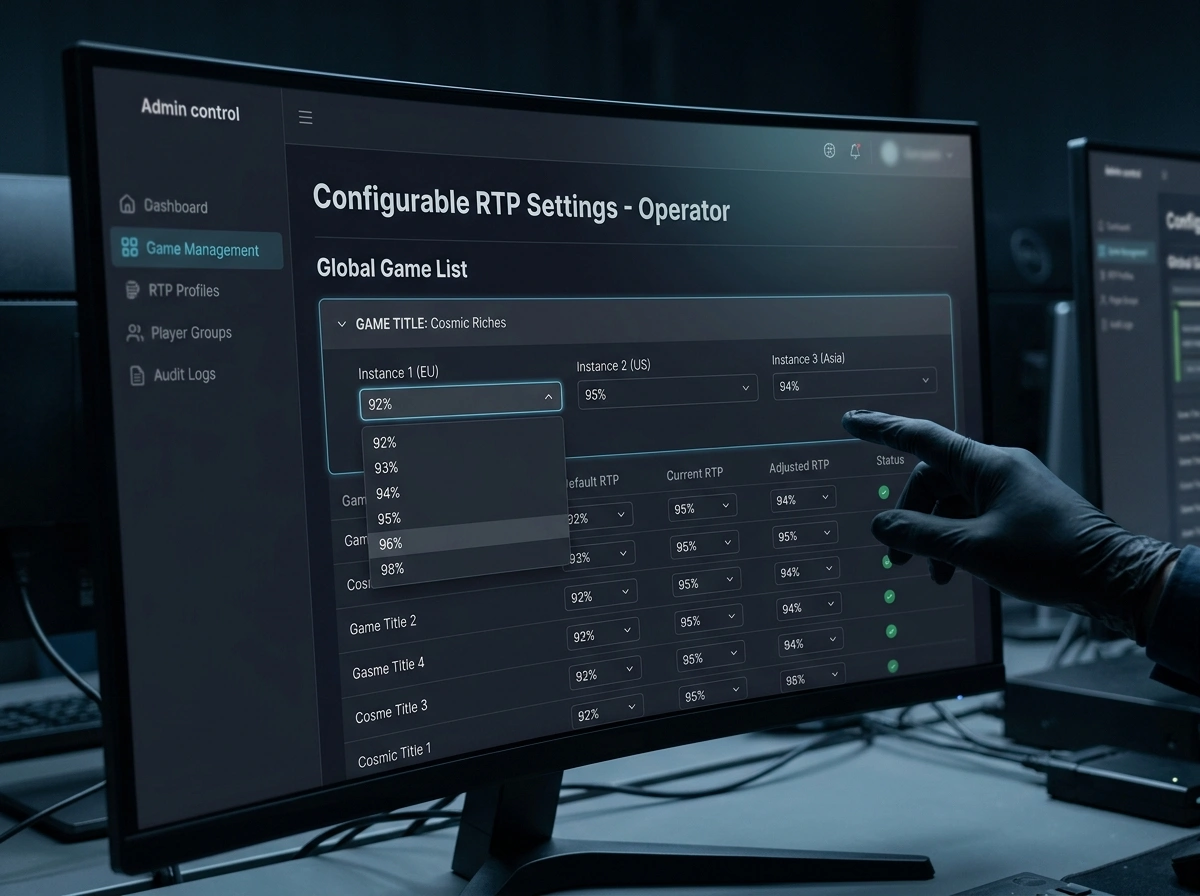
The configurable RTP issue is more widespread than most players assume. Some providers offer multiple RTP tiers as a standard feature, marketing it to operators as a way to «optimise margins.» An operator choosing between a 96% and 92% configuration is making a decision worth hundreds of thousands of euros over the game’s lifetime — and at an offshore casino, that decision is invisible to the player. The game looks and feels identical at either setting. Only the long-term return changes, and no individual player generates enough data to detect the difference through their own experience.
I’ve tested this by running extended sessions on identical games at regulated and unregulated operators, tracking outcomes over thousands of spins. The sample sizes are too small for statistical certainty — you’d need millions of spins to verify an RTP with confidence — but the directional patterns I’ve observed at some offshore operators are consistent with RTP settings lower than advertised. The problem is that no individual player can generate enough data to prove a discrepancy, and without regulatory auditing, there’s no institution doing it on their behalf.

Why RTP Transparency Matters More Than Players Realise
A 2-percentage-point difference in RTP — 96% versus 94% — sounds trivial. It’s not. That 2% is the difference in the house edge: a 4% edge versus a 6% edge. Over 10,000 euros in wagers, the player loses an expected 400 euros at 96% RTP and 600 euros at 94% RTP. The lower the RTP, the faster the player’s bankroll depletes, and the shorter the session lasts. For a player who sets aside 200 euros for an evening’s entertainment, the difference between 96% and 94% RTP is the difference between a reasonable session and a notably shorter one.
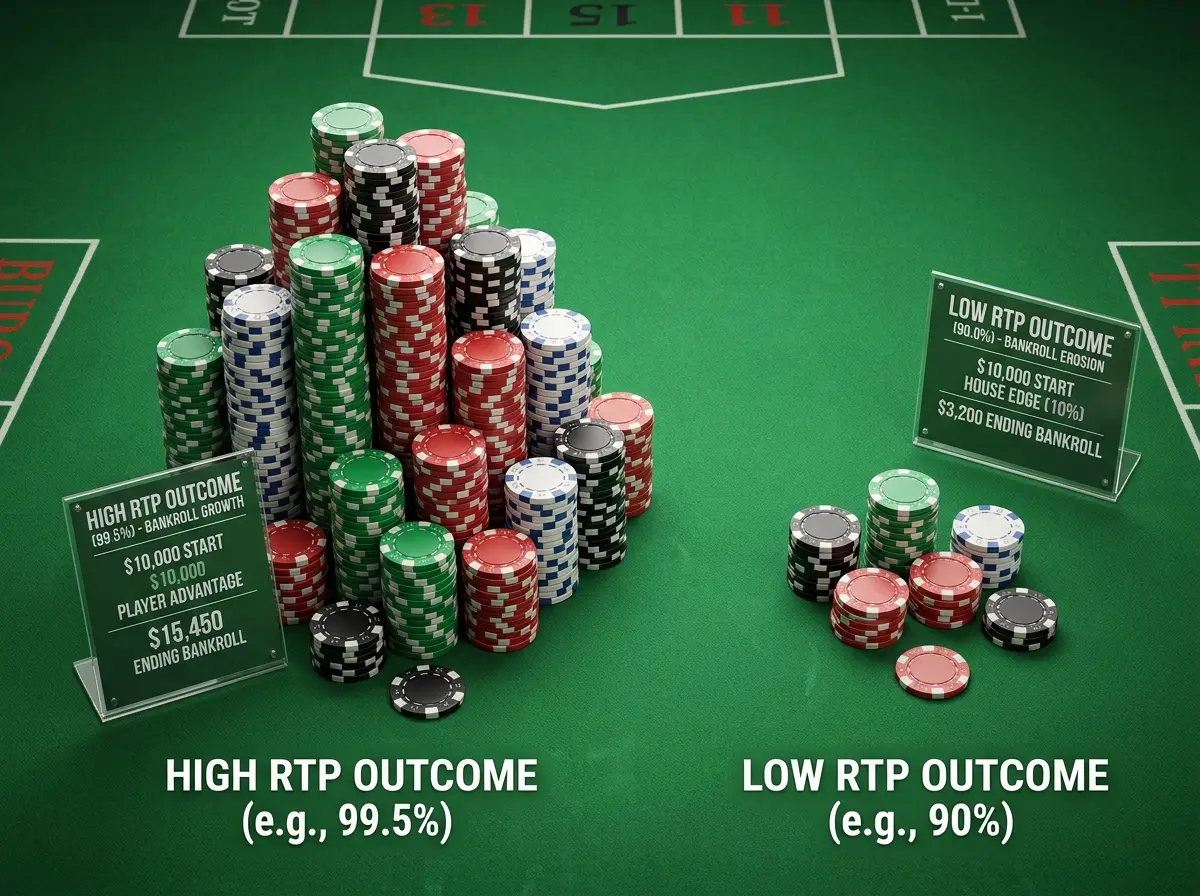
The DGOJ’s approach to game auditing exists because players can’t verify RTP themselves. The mathematics are invisible during play — you see symbols land, you see wins and losses, but you can’t calculate the underlying return from your visible experience. The audit system provides that verification externally, ensuring the game does what it claims to do. Without it, the published RTP is a promise with no verification, and the same trust gap that script casinos exploit applies to game mathematics as well.
There’s a broader market integrity question embedded in the RTP issue. If offshore casinos can run games at lower-than-advertised return rates without detection, they generate higher margins per player. Those margins fund more aggressive marketing, better affiliate commissions, and more attractive bonuses — which attract more players. The competitive advantage of dishonesty creates a race to the bottom where operators who configure fair RTPs are outcompeted by those who don’t. Regulatory auditing breaks this cycle by removing the informational asymmetry that makes dishonesty profitable.
FAQ
Can an offshore casino change the RTP of a slot game without the provider knowing?
If the game is served from the provider’s servers — as is the case with most major studios — the operator cannot modify the RTP because they don’t control the game software. However, some smaller providers offer configurable RTP settings that the operator selects during integration. In those cases, the operator chooses the RTP level, and without regulatory auditing, there is no external verification that the chosen setting matches what is displayed to players.
Is the RTP displayed in a game’s info screen always accurate?
At DGOJ-licensed casinos, the displayed RTP has been verified by an accredited testing laboratory and must match the game’s actual mathematical configuration. At offshore casinos, the displayed RTP is provided by the game developer and may or may not reflect the actual configured return. Without independent auditing, the displayed figure is informational rather than verified.