


Contenido
Years ago I helped a player navigate the self-exclusion process after he recognised he’d lost control of his gambling. The RGIAJ registration took less than ten minutes. Within 24 hours, every DGOJ-licensed casino had blocked his accounts. He told me later that the system saved him, not because it fixed the underlying problem, but because it removed the immediate access that was making everything worse. That’s what self-exclusion does at its best: it buys time for recovery by closing the doors that are easiest to walk through.
Approximately 4.3% of Spain’s adult population has faced gambling-related problems. Spain’s response — a combination of the RGIAJ register, DGOJ-mandated operator tools, and the incoming Safe Gambling Programme — represents one of Europe’s more comprehensive approaches to player protection. But every one of these tools has the same limitation: it only works within the regulated perimeter.
The RGIAJ Register: How Self-Exclusion Works in Spain
The RGIAJ — Registro General de Interdicciones de Acceso al Juego — is Spain’s national self-exclusion database. Anyone can request inclusion, and the process is deliberately straightforward. You apply through the DGOJ, and once registered, every licensed operator in Spain is legally required to block you from opening new accounts and to suspend any existing ones. The exclusion applies across all DGOJ-licensed platforms simultaneously — casino, betting, poker, bingo, everything.

The minimum exclusion period is six months, though many applicants choose longer terms. Removal from the register is not instant — it requires a formal request and a waiting period, which is a deliberate design choice. The friction to re-enter gambling is intentionally higher than the friction to leave it. This asymmetry reflects what we know about gambling disorder: the decision to stop is often made during a moment of clarity, while the urge to restart comes during a moment of vulnerability. The system is designed to protect the decision made in clarity.
What shook me when I first saw the 2025 data was this: over 7,600 people enrolled in the RGIAJ had their personal data used by third parties to open gambling accounts. Self-excluded individuals — people who had taken the most decisive step available to protect themselves — were being victimised by identity theft. The register protects against self-access but not against third-party misuse of personal data, which is a vulnerability that the PACS protocol now addresses but cannot fully close.

The PACS — Protocolo de Actuación Coordinada Segura — adds a verification layer that cross-references identity documents against the RGIAJ and known fraud patterns. It was introduced after the scale of the identity theft problem became undeniable, and it represents the kind of iterative improvement that distinguishes a mature regulatory system from a static one. The DGOJ blocked 229 portals covering 2,961 web pages in 2025, but blocking supply means little if demand is partly driven by stolen identities creating accounts that the real person never authorised.
The Safe Gambling Programme 2026-2030: Centralised Limits and Mandatory Algorithms
I read the Safe Gambling Programme framework the week it was published, and two elements stood out immediately: centralised cross-platform deposit limits and mandatory risk-detection algorithms for all licensed operators.

Centralised deposit limits mean that a player’s spending cap applies across every DGOJ-licensed operator, not just the one where the limit was set. Currently, a player who sets a 500-euro weekly limit at one casino can open an account at another and set a separate limit there. Centralisation eliminates this workaround by tracking total deposits across the entire regulated ecosystem. The DGOJ framed this as part of Spain’s orientation toward prevention and user protection from a public health perspective, incorporating advanced technological tools. The operational complexity is substantial — it requires real-time data sharing between all licensed operators — but the protective value is clear.
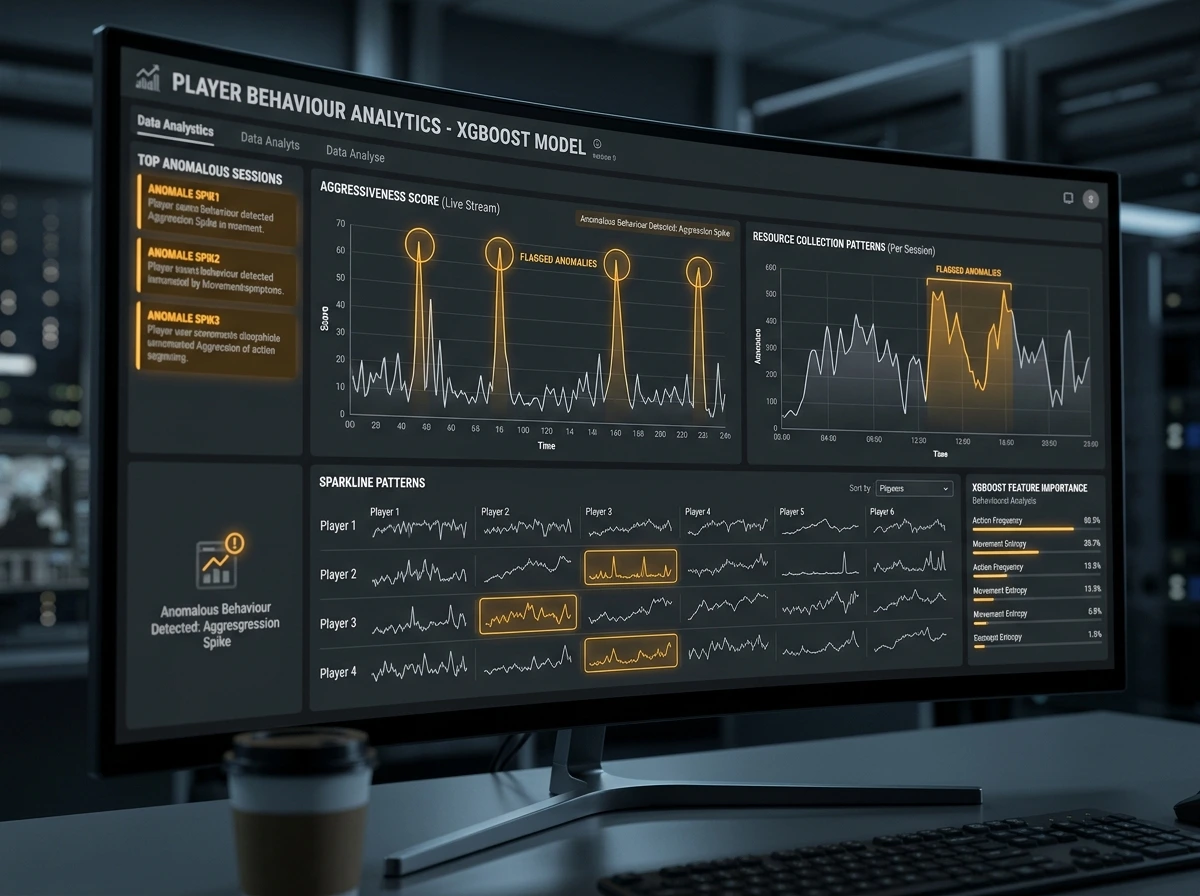
The mandatory risk-detection algorithms build on the DGOJ’s XGBoost model, which was trained on data from over 500 diagnosed individuals and can increase detection rates by 10 percentage points. Under the 2026-2030 Programme, every licensed operator will be required to implement behavioural monitoring that flags at-risk patterns — rapid deposit escalation, chasing losses, session length anomalies — and triggers intervention. The interventions range from pop-up warnings to mandatory cooling-off periods to referral for further assessment.
Why Self-Exclusion Does Not Apply to Offshore Casinos
This is the gap that no programme can close through regulation alone. The RGIAJ blocks access to DGOJ-licensed operators because those operators are legally bound to check the register. Offshore casinos operating under Curaçao, or with no licence at all, have no obligation to check the RGIAJ and no technical connection to it. A self-excluded player who navigates to an offshore casino encounters no barrier — no register check, no block, no prompt.

Roughly 14% of young online players aged 18 to 25 show symptoms of gambling disorder, and this demographic is also the most likely to access unregulated platforms. The combination is concerning: the players most at risk are the ones most likely to end up at platforms with the fewest protections. The DGOJ’s enforcement actions — blocking domains, sanctioning operators — reduce accessibility but don’t eliminate it. A determined player with basic technical knowledge can access offshore casinos despite DGOJ blocking efforts.
The 2026-2030 Programme acknowledges this limitation implicitly by focusing on making the regulated market as protective as possible, thereby reducing the incentive to go offshore. If deposit limits and spending controls at licensed operators become more flexible within safe parameters, one of the primary motivations for seeking out unregulated alternatives weakens. It’s not a complete solution — no regulatory approach is — but it’s a strategy grounded in the reality that prohibiting access to offshore casinos is technically impossible. The alternative is to make the regulated environment comprehensive enough that leaving it carries obvious and immediate costs.
FAQ
Can you self-exclude from offshore casinos through the RGIAJ?
No. The RGIAJ only applies to DGOJ-licensed operators, who are legally required to check the register and block registered individuals. Offshore casinos operating outside Spanish jurisdiction have no connection to the RGIAJ and no obligation to honour self-exclusion requests made through it. Some offshore operators offer their own voluntary self-exclusion tools, but these are not linked to any national register and their enforcement is entirely at the operator’s discretion.
What does the 2026-2030 Safe Gambling Programme change for deposit limits?
The programme introduces centralised cross-platform deposit limits, meaning a player’s spending cap will apply across all DGOJ-licensed operators simultaneously rather than separately at each one. It also mandates behavioural risk-detection algorithms for all licensed operators, requiring them to monitor player activity for patterns associated with gambling harm and trigger interventions when at-risk behaviour is detected.