

Contenido
Three years ago, I sat across from a compliance officer in Valletta who told me something I have never forgotten: «A licence is not a guarantee — it is a starting point.» He was right, and that single sentence captures the central problem with how most players evaluate offshore casinos. They see a logo at the bottom of the page — Curaçao, Malta, Gibraltar — and treat it as a stamp of approval. It is not. Each of those three jurisdictions operates under fundamentally different rules, with different enforcement powers, different player protections, and wildly different costs of entry for operators.
In my nine years analysing offshore iGaming regulation, I have reviewed hundreds of licence applications, tracked regulatory reforms across jurisdictions, and watched operators migrate from one licensing regime to another as costs and scrutiny shifted. The landscape in 2026 looks nothing like it did even two years ago. Curaçao’s LOK framework — the Landsverordening op de Kansspelen — dismantled the sub-licence system that had defined the jurisdiction for over a decade. The old master-licence holders who used to sell sub-licences to anyone with a server and a domain? Gone. Every operator now needs a direct licence from the Curaçao Gaming Authority, and that changes everything about what a Curaçao licence actually means.
Malta’s MGA remains the gold standard for European iGaming regulation, but «gold standard» comes with a price tag and a compliance burden that pushes smaller operators elsewhere. Gibraltar sits in a category of its own — tiny, selective, and increasingly focused on operators already established in the UK market. Understanding what separates these three jurisdictions is not academic. It determines whether the operator holding your deposit has any meaningful obligation to treat you fairly, or whether that licence logo is just decoration. Let me walk you through each one, based on what the regulatory texts actually say and what I have seen in practice.
Curaçao: From Sub-Licences to Direct CGA Regulation
I remember the first time I tried to trace a Curaçao sub-licence back to its source. The operator’s website showed a licence number. I clicked it, expecting a regulator’s database. Instead, I landed on the master licence holder’s website — a company that sold sub-licences the way a franchise sells branded storefronts. That was the old system, and for years it defined Curaçao’s reputation in the iGaming world: cheap, fast, minimal oversight.
The LOK framework ended that arrangement. When the legislation took effect in December 2024, all existing sub-licences expired. Every operator that had been running under a master licence holder’s umbrella had to apply directly to the Curaçao Gaming Authority for a new, standalone licence. The transition deadline was January 2025, and operators that failed to secure a direct licence were technically operating without authorisation from that point forward.
What does a direct CGA licence actually require? The annual cost sits at approximately 47,000 euros — not insignificant for smaller operators, but a fraction of what Malta or Gibraltar demand. The application process now includes background checks on beneficial owners, proof of financial reserves, technical audits of the gaming platform, and anti-money laundering procedures. On paper, these requirements look comparable to what you would expect from a mid-tier European regulator. In practice, the CGA is still building its enforcement capacity, and the gap between what the regulations say and what gets enforced remains wider than in Malta or Gibraltar.

One detail that often gets missed: Curaçao does not apply specific gross gaming revenue taxes on gambling operations. Since January 2025, a 15% minimum tax applies to multinationals with consolidated revenue exceeding 750 million euros — part of the OECD’s global minimum tax framework — but most Curaçao-licensed operators fall well below that threshold. The tax advantage is real, and it is one reason operators choose Curaçao even when the reputational cost is higher. Compare that to the UK, where Remote Gaming Duty jumped to 40% in April 2026, or to the European average tax rate of roughly 19% across sixteen EU states. From a purely financial perspective, Curaçao remains the most cost-efficient licensing jurisdiction for iGaming operators by a wide margin.
For players, the practical difference between old-system and new-system Curaçao licences is significant. Under the sub-licence model, your complaint went to the master licence holder — who had a financial incentive to keep the operator happy, not you. Under the direct CGA model, there is at least a regulatory body you can contact. Whether the CGA has the resources to handle player disputes at scale is a different question, and one that 2026 will begin to answer. For a deeper look at the mechanics of this transition, I have covered the Curaçao LOK reform in a separate analysis.
Malta MGA: Europe’s Most Established iGaming Regulator
If Curaçao is the jurisdiction operators go to when they want to launch fast, Malta is where they go when they want to last. I have spoken with operators who spent eighteen months and six figures on the MGA application process alone — and considered it worthwhile because of what the licence signals to payment processors, game providers, and players.
The Malta Gaming Authority has been regulating online gambling since 2004, making it one of the oldest dedicated iGaming regulators in the world. Its framework operates under a single-licence model introduced in 2018 that replaced the older class-based system. An MGA licence covers all B2C gaming activities — casino, sports betting, poker — under one authorisation, but the compliance requirements are layered and ongoing. Operators face regular audits, mandatory player fund segregation, detailed reporting obligations, and advertising standards that are enforced through fines and licence suspensions.
EGBA members — the major European gambling industry association — collectively hold 321 licences across 21 European countries, with combined gross gaming revenue reaching 13.5 billion euros in 2024 alone. Malta is the single largest licensing hub within that network. The concentration of the industry there is not accidental: Malta offers a regulatory framework that payment providers and banking partners trust, which means MGA-licensed operators have fewer problems processing deposits and withdrawals through mainstream financial channels.
The cost reflects the position. An MGA licence application fee starts at 25,000 euros, with annual compliance fees that scale based on revenue. Add legal costs, technical compliance, and the ongoing audit requirements, and the total annual regulatory burden for a mid-size operator easily exceeds 200,000 euros. That price filters out the kind of low-budget operations that proliferate under lighter licensing regimes.
For players, the MGA licence means two things that matter in practice. First, player funds must be held in segregated accounts, separate from the operator’s operating capital. If the operator goes bankrupt, your balance is protected — at least in theory. Second, the MGA operates a player support function that handles complaints directly. I have seen it work: it is slow, sometimes frustratingly bureaucratic, but it exists, and operators who ignore MGA directives risk losing a licence that cost them real money to obtain. That threat creates a compliance incentive that lighter jurisdictions simply do not generate.

The limitation is geographical. An MGA licence authorises an operator to serve players in jurisdictions where online gambling is either unregulated or where the MGA has a mutual recognition agreement. It does not authorise serving players in Spain, which requires a separate DGOJ licence. An MGA-licensed casino that actively targets Spanish players without DGOJ approval is operating outside the bounds of both regulators — a point that gets lost in marketing copy more often than it should.
Gibraltar: The Compact Jurisdiction With High Entry Barriers
Gibraltar is the jurisdiction nobody stumbles into by accident. When I first started tracking licensing data a decade ago, I noticed something odd: operators rarely moved to Gibraltar, but those already there almost never left. The reason became clear once I looked at the entry requirements.
The Gibraltar Gambling Commission operates under the Gambling Act 2005 (amended multiple times, most recently in 2024) and issues licences under a regime that is deliberately restrictive. There is no published fee schedule — applicants deal directly with the commission, and licence costs are negotiated based on the operator’s size, activity type, and projected revenue. The barrier is not just financial. Gibraltar requires operators to maintain a physical presence on the Rock: real offices, real employees, real infrastructure. For a territory of roughly 34,000 people occupying 6.7 square kilometres, that constraint alone filters out the vast majority of applicants.
The operators that hold Gibraltar licences tend to be large, established companies with a UK market focus. This is not coincidental. Gibraltar has a close regulatory relationship with the United Kingdom, and many Gibraltar-licensed operators also hold UK Gambling Commission licences. The dual-licensing model serves a specific strategic purpose: operators use Gibraltar as a corporate base for tax efficiency while maintaining UKGC compliance for market access. The recent UK Remote Gaming Duty increase to 40% has made this arrangement even more attractive for operators looking to manage their tax exposure — Flutter’s decision to relocate Sky Bet’s headquarters from London to Malta, saving an estimated 55 million pounds in UK tax, illustrates how seriously operators take these calculations.
For players, a Gibraltar licence sits between Malta and Curaçao in practical terms. Player protections exist and are enforced, but the dispute resolution process is less transparent than Malta’s. The commission publishes limited information about enforcement actions compared to the MGA or the UKGC, which makes independent assessment harder. What Gibraltar does offer is stability: the operators there are well-capitalised, have been in the market for years, and have too much invested in their licences to risk losing them over a player dispute. The sheer cost of establishing and maintaining a Gibraltar operation — physical offices, local staff, regulatory fees — creates a natural barrier against fly-by-night operators.
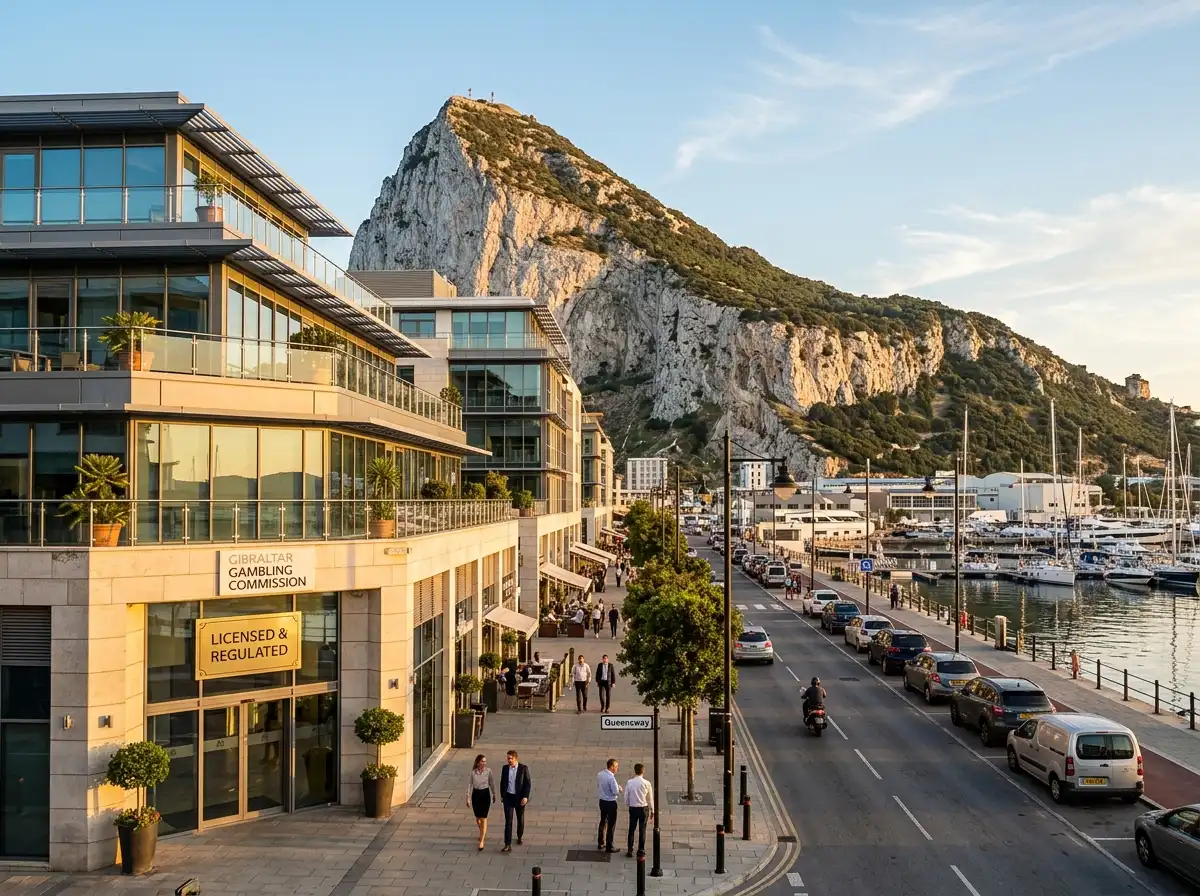
The downside is accessibility. If you are a Spanish player using a Gibraltar-licensed casino that does not hold a DGOJ licence, the Gibraltar Gambling Commission has no obligation to assist you. Its jurisdiction covers the operator’s conduct under Gibraltar law, not its relationship with players in regulated foreign markets. That distinction matters when something goes wrong.
Side-by-Side: Costs, Player Protections, and Enforcement Power
Numbers tell the story more efficiently than paragraphs, so let me lay out the three jurisdictions against the criteria that actually affect players.
Start with cost of entry. Curaçao’s direct CGA licence runs approximately 47,000 euros per year. Malta’s MGA licence, once you factor in application fees, compliance costs, legal support, and audits, reaches 200,000 euros or more annually for a typical operator. Gibraltar does not publish fixed fees, but industry estimates place the total annual regulatory cost — including mandatory physical presence — above 300,000 euros. These numbers matter because they determine the type of operator each jurisdiction attracts. A casino running on thin margins and aggressive bonus marketing is far more likely to hold a Curaçao licence than a Malta or Gibraltar one.
Player fund protection diverges sharply. Malta mandates segregated accounts: player balances must be held separately from the operator’s working capital, overseen by an independent auditor. Gibraltar requires operators to demonstrate adequate financial resources to cover player liabilities, though the specific mechanism is less prescriptive. Curaçao’s LOK framework introduced financial reserve requirements, but the details of segregation and independent oversight are still being defined in practice. If an operator collapses, your money is most protected under an MGA licence and least protected under a Curaçao one — that has not changed despite the reform.
Dispute resolution is where the differences become personal. The MGA operates a dedicated Player Support Unit that accepts complaints from players, investigates, and can compel operators to act. I have seen cases resolved in eight to twelve weeks. Gibraltar’s complaint process runs through the commission but receives less public documentation. Curaçao’s CGA is building its complaint-handling capacity, but as of early 2026, the process remains less established than either European counterpart.
Maarten Haijer, Secretary General of EGBA, has made a point that applies directly here: overly restrictive regulations risk pushing people toward unregulated operators and undermining the purpose of regulation. The flip side of that argument is equally true. Overly permissive licensing creates jurisdictions where the licence functions as a marketing asset rather than a regulatory instrument. The spectrum from Curaçao to Malta to Gibraltar illustrates both ends.

Enforcement power is the final differentiator. Malta has revoked licences, issued seven-figure fines, and published detailed enforcement actions that serve as precedent. The MGA’s regulatory track record is public and verifiable. Gibraltar’s enforcement actions are less visible but no less consequential for the operators involved. Curaçao’s CGA has issued licence revocations under the new framework, but its enforcement track record is still being established. The question is not whether the CGA will enforce — it is whether it can enforce at the scale needed, given the number of operators the jurisdiction historically attracted.

What the Licence Tells You — and What It Does Not
Here is the uncomfortable truth I keep coming back to after nine years in this space: a licence tells you what the operator was willing to pay for, not how they will treat you. I have seen MGA-licensed operators drag out withdrawal requests for weeks using verification pretexts. I have seen Curaçao-licensed operators process payouts in under an hour. The licence sets a floor for accountability, not a ceiling for behaviour.
What the licence does tell you, reliably, is where you can complain and whether anyone will listen. Under an MGA licence, a player complaint triggers a regulatory process with defined timelines and potential sanctions. Under a Curaçao CGA licence, the process exists but lacks the enforcement track record that gives it weight. Under a Gibraltar licence, the process is available but less visible. Under no licence at all, you are talking to a wall. The DGOJ blocked 229 portals covering 2,961 web pages offering illegal gambling in 2025 — many of those sites displayed licence logos that were either fabricated, expired, or belonged to a different entity entirely.
The licence also tells you something about the operator’s financial commitment. An operator that spent upwards of 200,000 euros on Malta compliance has more to lose than one that spent 47,000 euros on a Curaçao licence. That financial stake creates an incentive to resolve disputes rather than risk regulatory action. It is not altruism — it is rational self-interest, and from a player’s perspective, that is more reliable than altruism anyway.
There is a common misconception I encounter constantly in player forums and review sites: the idea that any offshore licence is equivalent to «unregulated.» That framing is sloppy. A casino with a valid MGA licence and no DGOJ licence is internationally regulated but domestically unauthorised in Spain. A casino with a fabricated Curaçao licence number is genuinely unregulated. A casino with a valid post-LOK CGA licence sits somewhere in between — regulated, but by a jurisdiction still establishing its enforcement credibility. Collapsing these categories into a single label helps nobody.
What the licence does not tell you is whether the specific games on the platform are fair, whether the RTP settings match what the provider specifies, whether the operator’s marketing claims are accurate, or whether your personal data is handled securely. Those are operational questions that depend on the individual operator, and no licence — not even Malta’s — guarantees the answers. The licence gives you a starting point for evaluation. What you do after that starting point determines whether you are gambling informed or gambling blind.

Does the new Curaçao LOK framework make its licence more trustworthy than before?
The LOK reform eliminated the sub-licence system, which was the single biggest credibility problem with Curaçao licensing. Under the old model, master licence holders sold sub-licences with minimal vetting. The new framework requires direct CGA licensing with background checks, financial reserves, and AML procedures. It is a significant improvement, but the CGA is still building its enforcement capacity. Whether it reaches the level of Malta or Gibraltar depends on how aggressively it enforces the new rules over the next two to three years.
Can a Malta MGA-licensed casino legally serve Spanish players without DGOJ approval?
No. Spain’s gambling regulation under Ley 13/2011 requires any operator targeting Spanish players to hold a DGOJ licence. An MGA licence authorises operations in jurisdictions where online gambling is unregulated or where mutual recognition agreements exist. Spain is neither. An MGA-licensed operator actively marketing to Spanish players without DGOJ authorisation is operating outside both regulatory frameworks.
How do licence costs compare across Curaçao, Malta, and Gibraltar?
Curaçao’s direct CGA licence costs approximately 47,000 euros per year. Malta’s MGA licence, including application fees, legal costs, and ongoing compliance, typically exceeds 200,000 euros annually for a mid-size operator. Gibraltar does not publish fixed fees but requires a physical presence on the territory, pushing total annual costs above 300,000 euros. These cost differences directly correlate with the type and scale of operators each jurisdiction attracts.
What happens to player funds if a Curaçao-licensed casino shuts down?
Under Malta’s MGA framework, player funds must be held in segregated accounts, providing a layer of protection if the operator becomes insolvent. Curaçao’s LOK framework introduced financial reserve requirements, but the segregation and independent oversight mechanisms are less developed. In practice, if a Curaçao-licensed operator closes without warning, recovering player funds is significantly more difficult than under an MGA licence. The CGA’s complaint resolution process exists but lacks the enforcement history of Malta’s Player Support Unit.
Consulta más información sobre casino sin licencia en nuestra página principal.
También te puede interesar el artículo sobre Curacao Malta Gibraltar Licence Comparison.