

Contenido
A colleague who handles compliance for a DGOJ-licensed operator told me about a registration attempt that flagged their system in early 2025: a 17-year-old had used their older sibling’s DNI to create an account. The system caught it because the photo verification didn’t match the document holder’s age range. At an offshore casino, that same attempt would have succeeded — and nobody would have checked.
DGOJ Age Verification: How the Regulated System Works
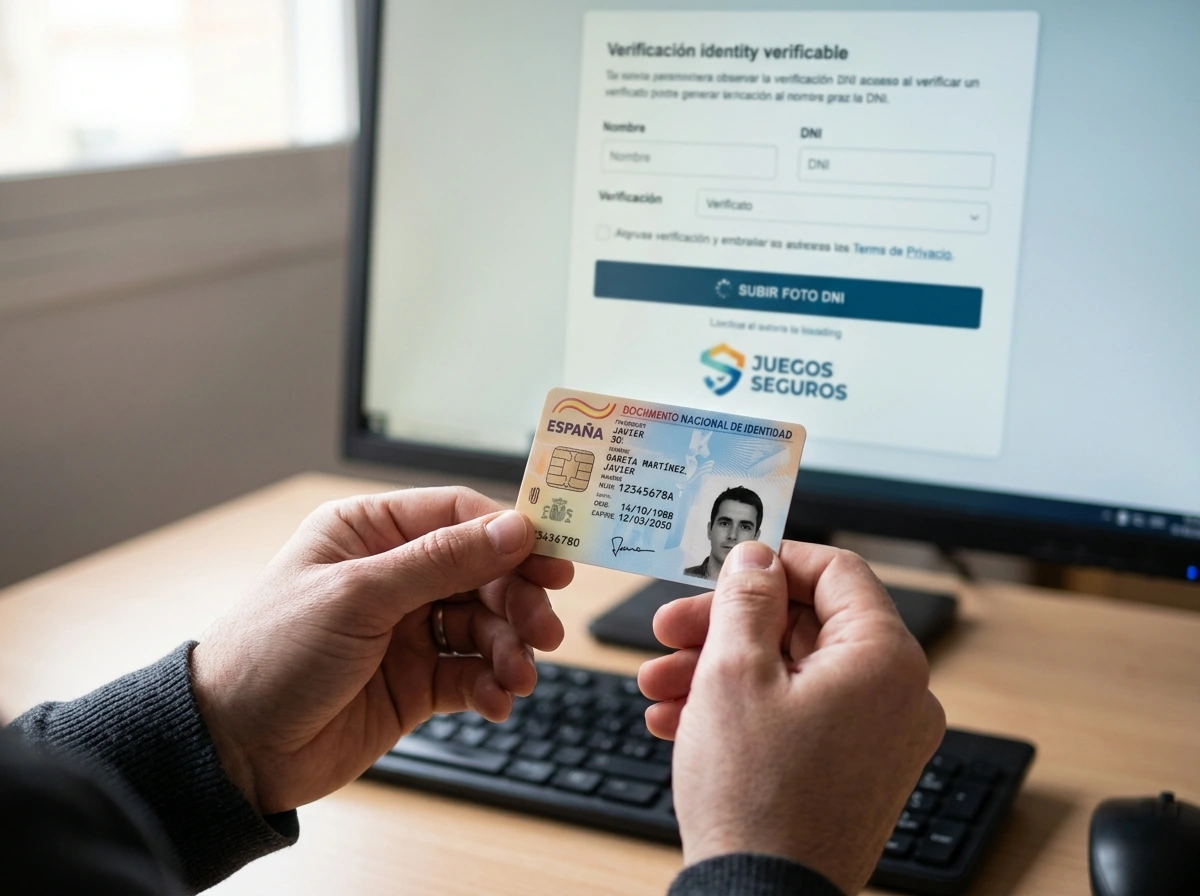
DGOJ-licensed operators must verify that every player is at least 18 years old before allowing them to deposit or play. The verification process uses the DNI number cross-referenced against Spain’s identity databases. The operator submits the player’s name, DNI number, and date of birth, and receives confirmation of whether the data matches and whether the individual is of legal age. This verification happens at registration, before the player can access any gambling content.

The system isn’t perfect. As the sibling case illustrates, document-based verification can be circumvented by someone with access to another person’s identity documents. But the key point is that verification exists, is mandatory, and creates a documented trail. If a minor is discovered gambling at a DGOJ-licensed casino, the operator faces regulatory sanctions, and the RGIAJ register is checked to ensure the minor — or the document holder — is flagged for follow-up.
The verification process also acts as a deterrent through friction. A minor attempting to use a parent’s DNI must provide consistent personal details, navigate the verification process, and in many cases submit supporting documentation such as a photo holding the identity document. Each step increases the risk of detection and the effort required to succeed. This friction-based deterrence isn’t foolproof, but it converts what would be a trivial process at an offshore casino — checking a box — into a multi-step process with meaningful chances of failure.

The DGOJ’s Safe Gambling Programme 2026-2030 is expected to strengthen age verification further, potentially incorporating biometric checks or enhanced document verification that makes identity sharing harder. These improvements respond to data showing that roughly 14% of young online players aged 18 to 25 already show symptoms of gambling disorder — a figure that underscores the importance of preventing even younger individuals from accessing gambling products.
Why Offshore Casinos Skip Meaningful Age Checks
At most offshore casinos, age verification consists of a checkbox during registration: «I confirm I am 18 years old.» Some operators request a date of birth entry. Almost none verify the information against any external database. The checkbox exists to satisfy the operator’s terms of service — a legal defence mechanism rather than a protective one.

The economics are simple. Robust age verification costs money — identity verification services charge per check, and the infrastructure to implement them requires development time and ongoing maintenance. An offshore operator has no regulatory incentive to bear these costs. Every verification step also creates friction in the registration process, and friction reduces conversion rates. An operator whose business model depends on rapid player acquisition has a direct commercial interest in making registration as frictionless as possible, which means minimising verification barriers.
Some offshore casinos implement document verification at the withdrawal stage rather than at registration. This means a minor can register, deposit, and play without any identity check — the verification only occurs when they attempt to withdraw winnings. By that point, the money has been risked, the gambling activity has occurred, and the potential harm has been done. The withdrawal-stage verification protects the operator’s funds, not the player’s welfare. It’s a financial control disguised as a compliance measure.

Over 8,675 identity theft complaints were filed in connection with gambling accounts in Spain in 2025. Some of those involved minors’ documents being used to create adult accounts. The PACS protocol — the DGOJ’s coordinated action protocol for identity verification — was designed partly to address this vulnerability, but its protections only apply within the regulated ecosystem. At offshore casinos, stolen or borrowed identity documents encounter no such scrutiny.
The Consequences of Inadequate Age Verification
A minor who accesses an offshore casino encounters a product designed for adults with adult-level financial tools: real-money deposits, bonuses with complex wagering requirements, high-volatility games, and no spending controls. The damage potential is amplified by the absence of every protective mechanism the regulated market provides: no deposit limits, no session alerts, no behavioural risk detection, and no self-exclusion register.

The youth gambling data from Spain suggests that early exposure correlates with later disorder. The 14% symptom rate among 18-to-25-year-olds reflects a population that came of age alongside the growth of accessible online gambling. For younger individuals — those under 18 who circumvent weak age verification at offshore casinos — the exposure occurs during a developmental period when impulse control and risk assessment are still maturing. The combination of immature decision-making and unrestricted access to gambling products is the scenario that age verification exists to prevent.
The Murcia data — showing 283 gambling disorder cases per 100,000 residents, the highest rate in Spain — illustrates how regional factors interact with access barriers. Areas with higher online penetration and weaker local enforcement may see more minors accessing gambling content through offshore platforms. The DGOJ’s national verification system provides a baseline, but minors who bypass it through offshore casinos encounter no regional safety net either. The protective infrastructure ends at the border of the regulated market.
The regulated market’s verification system is imperfect but functional. The offshore market’s verification system is, in most cases, performative. The gap between the two represents one of the clearest distinctions between regulated and unregulated gambling: the question of whether anyone is checking if the player should be there at all.
FAQ
Can a minor gamble at a DGOJ-licensed casino using a parent’s documents?
The DGOJ’s verification system cross-references DNI data against national identity databases, which reduces but does not eliminate the risk of document misuse. Some operators implement additional checks such as photo verification that can flag age discrepancies between the document holder and the person registering. If a minor is discovered gambling, the operator faces regulatory sanctions and the account is immediately suspended.
What age verification do offshore casinos typically require?
Most offshore casinos require only a self-declaration checkbox or date of birth entry during registration, with no external verification against identity databases. Some request document uploads during withdrawal processing, but this typically occurs after the player has already deposited and gambled. The verification is designed to satisfy terms of service rather than to prevent underage access.