


Contenido
An operator I was advising in 2023 went through a severe cash-flow crisis. For three weeks, player withdrawal requests were delayed because the operator’s operational expenses and player balances were sitting in the same bank account. When the company’s monthly bills came due, the money that players thought was theirs was temporarily unavailable. That operator held a legitimate licence and eventually resolved the situation. Most offshore casinos that face the same problem don’t.
What Fund Segregation Means and Why Regulators Require It
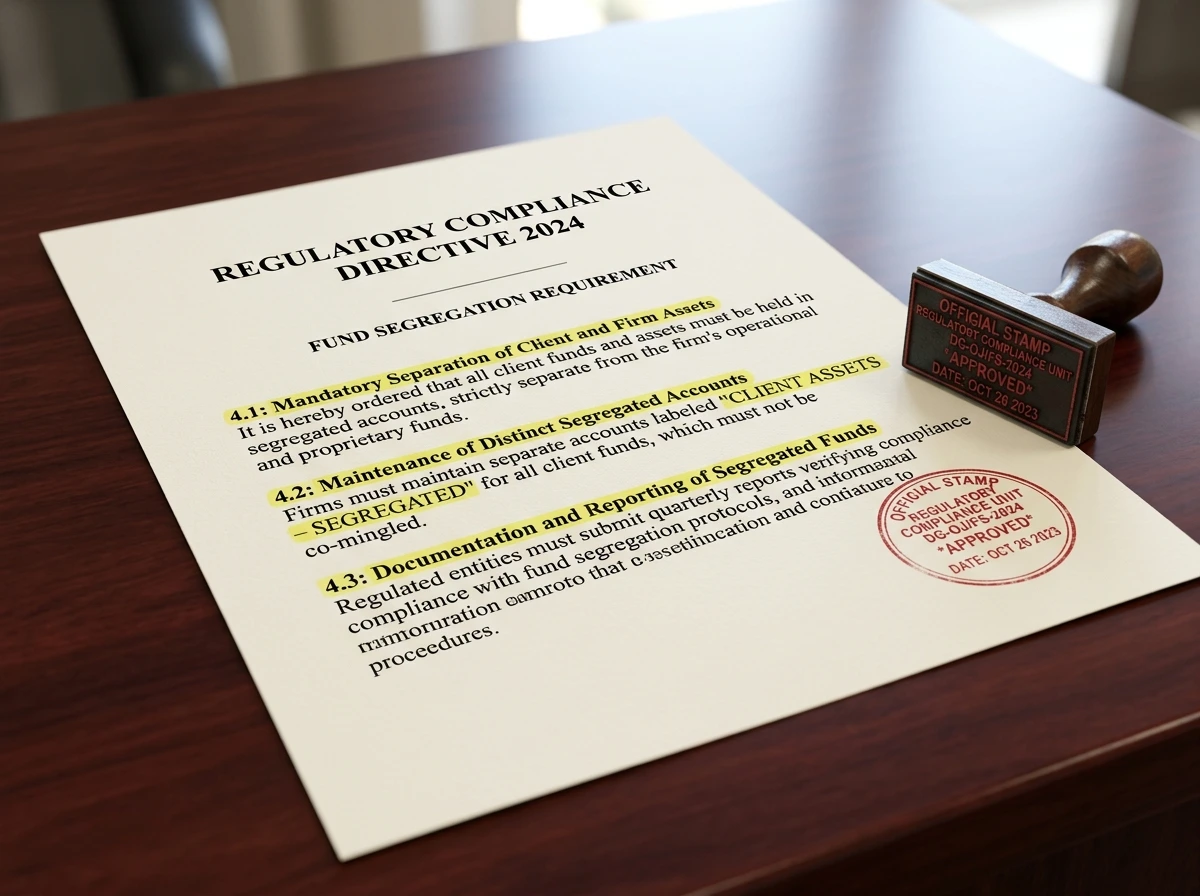
Fund segregation is a simple concept with enormous protective value. It means that player deposits and balances are held in bank accounts separate from the operator’s business funds. Your money sits in one account. The operator’s revenue, expenses, and profits sit in another. If the operator goes bankrupt, your deposits are ring-fenced — they’re not part of the operator’s estate and can’t be seized by the operator’s creditors.

DGOJ-licensed operators in Spain are required to segregate player funds. The Curaçao CGA’s LOK framework also now requires fund segregation — one of the most significant improvements over the old sub-licence system. Malta’s MGA has enforced segregation for years, and the UK’s Gambling Commission requires operators to protect player funds through one of three mechanisms: a separate trust account, an insurance-backed arrangement, or ringfenced accounts with independent oversight.
Player deposits in Spain’s regulated market reached 4,322.46 million euros in 2025, with withdrawals at 3,013.63 million euros. The difference — the money sitting in player accounts at any given moment — represents billions of euros that are protected by fund segregation requirements. Without segregation, that money would be part of the operator’s general funds, available to cover operating costs, marketing spend, and executive compensation.
How Offshore Casinos Handle Player Money
Most offshore casinos don’t segregate player funds. They’re not required to, and doing so imposes operational constraints that reduce financial flexibility. When player deposits land in the same account as operator revenue, the operator has immediate access to that money for any purpose. This creates a structural incentive problem: the operator’s short-term financial interest is served by using player deposits to fund operations, even though the player expects that money to be available for withdrawal at any time.

The consequences surface when the operator faces financial difficulty. In a downturn — fewer players, higher costs, a regulatory sanction in another market — the operator’s general fund shrinks. If player money is co-mingled with that fund, withdrawals become difficult or impossible. The operator doesn’t have the player’s money because it was spent on running the business. This isn’t fraud in the traditional sense — it’s a structural failure that co-mingled funds make inevitable during financial stress.
The problem is compounded by the offshore casino business model’s inherent instability. Many offshore operators run on thin margins, with marketing spend consuming a disproportionate share of revenue. The 664.40 million euros that DGOJ-licensed operators spent on marketing in 2025 came from regulated revenue with segregated player funds intact. Offshore operators face similar marketing costs but without the financial discipline that segregation imposes. When marketing spend eats into the general fund and player balances aren’t protected, the operator is effectively financing customer acquisition with player deposits — a practice that works until it doesn’t.
I’ve tracked multiple offshore casino closures where players lost their entire balances because the operator had no segregated funds to distribute. The closure pattern is consistent: withdrawal times stretch from days to weeks, customer support becomes unresponsive, social media complaints accumulate, and eventually the site goes dark. The money is gone. There’s no insolvency administrator distributing ring-fenced player funds because no ring-fenced funds existed. The players’ deposits were spent months ago on server costs, marketing, and software licences.
Verifying Fund Segregation Before You Deposit
At a DGOJ-licensed casino, you don’t need to verify fund segregation — it’s a regulatory requirement enforced by the DGOJ. At an offshore casino, you’d need to verify it yourself, and the tools for doing so are limited. Some operators publish statements claiming fund segregation without providing audited evidence. Others don’t mention it at all. The absence of any mention is more honest than a false claim, but neither gives you the protection that regulatory enforcement provides.
Curaçao’s LOK reform introduced fund segregation requirements for CGA-licensed operators, bringing the jurisdiction closer to the standards set by Malta and Gibraltar. The reform’s practical impact depends on the CGA’s enforcement capacity — a segregation requirement that isn’t audited is a requirement on paper only. For players evaluating an offshore operator’s trustworthiness, the jurisdiction’s regulatory track record on fund segregation enforcement is as important as the requirement itself. A new regulator with strong rules but no enforcement history offers less practical protection than an established regulator with a documented record of sanctions for non-compliance.
The practical indicators are indirect. An operator that processes withdrawals consistently and quickly — within the timeframes stated in its terms — is more likely to have adequate liquidity, whether through segregation or simply through healthy cash flow. An operator that regularly delays withdrawals, imposes new verification requirements at the withdrawal stage, or reduces maximum withdrawal amounts is showing signs of liquidity stress that are consistent with co-mingled funds under pressure.

Raúl Torres, a legal advisor who works with gambling harm cases, has noted that around 90% of the problems he encounters originate from unlicensed casinos. Fund loss during operator insolvency is among those problems — a risk that withdrawal behaviour at offshore casinos can sometimes signal before the worst happens. The best protection is the simplest: only deposit money you can afford to lose entirely, because at an offshore casino without fund segregation, that’s a realistic outcome.
FAQ
What happens to my deposit if an offshore casino shuts down?
If the offshore casino does not segregate player funds — and most do not — your deposit is part of the operator’s general funds. When the operator ceases operations, those funds may have already been spent on business expenses. There is typically no insolvency process that returns ring-fenced player money because no ring-fenced money exists. Players in this situation generally lose their entire balance with no realistic path to recovery.
Do Curaçao-licensed casinos now require fund segregation under the LOK?
Yes. The LOK framework, which took effect in December 2024, requires operators licensed by the Curaçao Gaming Authority to segregate player funds from operational funds. This is a significant change from the old sub-licence system, which did not consistently require or enforce fund segregation. However, the CGA’s enforcement track record on this requirement is still being established.