


Contenido
At a regulatory conference in Rome in early 2026, the DGOJ presented something that made me sit up straighter in my chair. It wasn’t another enforcement statistic or policy proposal. It was a machine learning model — specifically an XGBoost classifier — trained to detect problem gambling behaviour before the player themselves may recognise the pattern. After nine years of watching regulators rely on reactive tools — self-exclusion, deposit limits, post-harm intervention — seeing a proactive detection system with real data behind it felt like a genuine shift.
How the XGBoost Model Was Built and What Data It Uses
The DGOJ developed the algorithm in collaboration with academic researchers, training it on data from over 500 individuals diagnosed with gambling disorder. That diagnostic data — real clinical cases, not survey responses — formed the labelled dataset that taught the model what at-risk gambling behaviour looks like in transactional terms. The DGOJ described this as reinforcing the Spanish regulatory model, oriented toward prevention and user protection from a public health perspective, incorporating advanced technological tools.

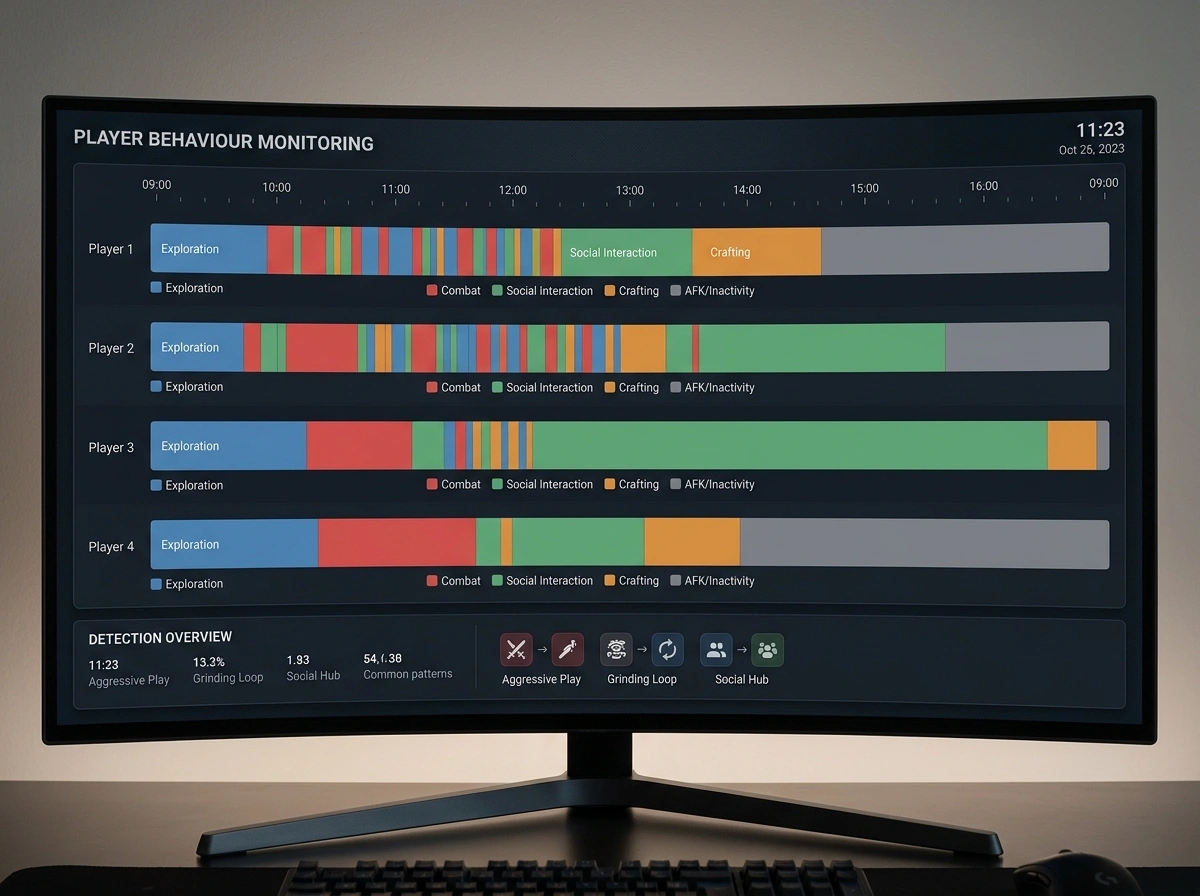
XGBoost — extreme gradient boosting — is a machine learning framework particularly suited to classification problems where you want to predict a binary outcome: at-risk or not at-risk. The model analyses player behaviour across multiple dimensions simultaneously. Rather than relying on any single indicator, it weights dozens of behavioural signals and their interactions to produce a risk score.
The specific features the model evaluates aren’t fully public, but based on the technical presentation and related regulatory documentation, they include deposit frequency and escalation patterns, session duration and timing, loss-chasing sequences where bets increase after losses, the ratio of deposits to withdrawals over time, and the speed at which players cycle through their balance. Each of these features individually might flag normal behaviour — a long session, a large deposit, a late-night login. The model’s value is in recognising combinations and patterns across features that correlate with diagnosed gambling disorder.
A 10-Percentage-Point Improvement in Detection Rates
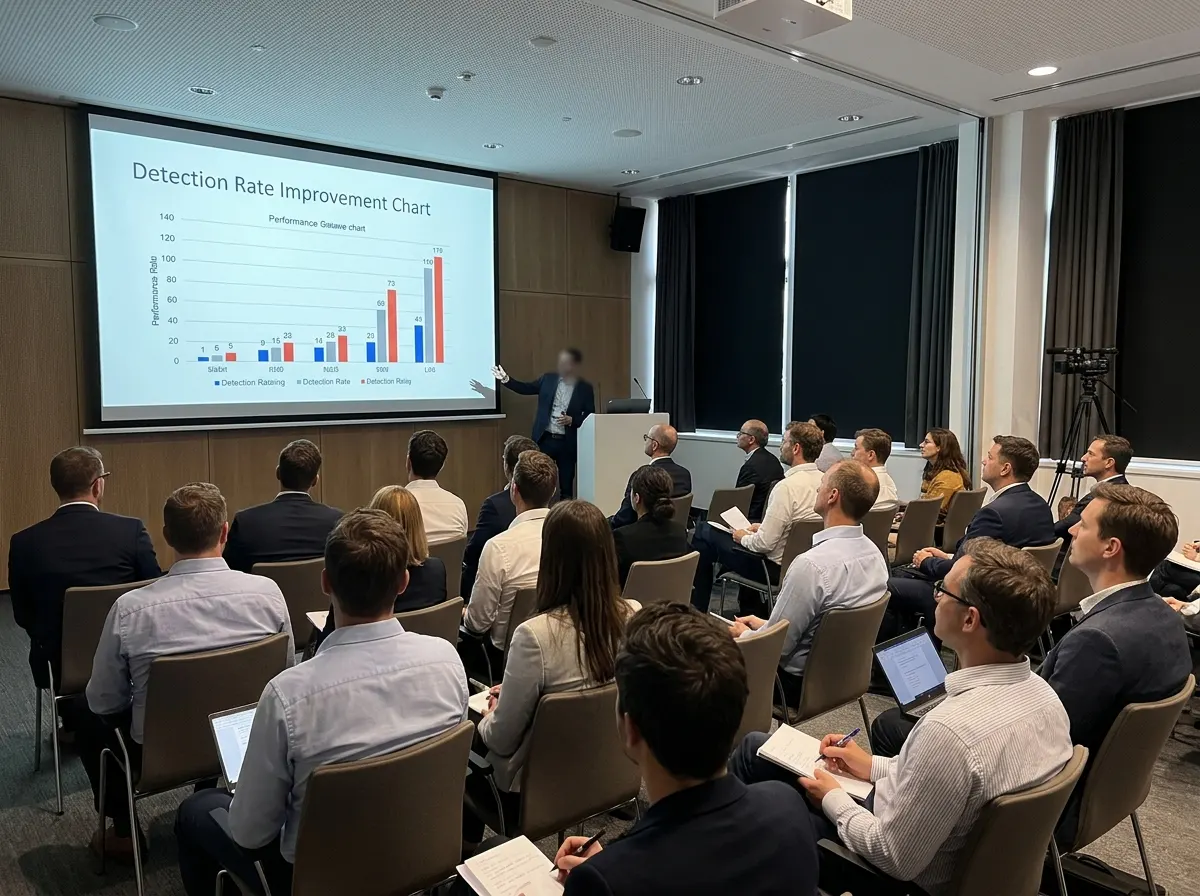
The headline result from the DGOJ’s presentation: the XGBoost model could increase detection rates by 10 percentage points compared to existing rule-based systems. That might sound modest, but in the context of gambling harm detection, it’s substantial.
Traditional detection systems use hard thresholds — if a player deposits more than X euros in Y days, flag the account. These rules catch the most extreme cases but miss the subtler patterns: the player who deposits just below the threshold repeatedly, or who spreads their activity across sessions in a way that no single metric captures. Machine learning excels precisely at detecting these distributed patterns, finding signal in the noise that rule-based systems can’t see.
The 10-percentage-point improvement means that for every 100 at-risk players, the model identifies 10 more than the previous system would have caught. Extrapolate that across 2.1 million active players in Spain’s regulated market, and the number of additional early interventions becomes meaningful. Early intervention — a prompt, a session limit, a mandatory break — doesn’t cure gambling disorder, but it interrupts the escalation cycle at a point where the financial and psychological damage is still containable.
The model’s performance depends critically on the quality and representativeness of its training data. Five hundred diagnosed cases is a reasonable starting dataset, but gambling disorder manifests differently across demographics, game types, and spending levels. The DGOJ will need to continuously retrain and validate the model as more data becomes available, and as player behaviour evolves in response to new game formats and platform features.

There’s also the false positive question. Any detection system that flags at-risk behaviour will inevitably flag some players who are not at risk — recreational high-rollers, players celebrating a birthday with a larger-than-usual session, or simply players whose natural gambling pattern resembles an at-risk profile. The intervention triggered by a false positive needs to be proportionate: an informational prompt or a gentle nudge, not an account suspension. Getting that calibration right is what separates a system that protects players from one that alienates them — and alienation drives players toward offshore platforms where no one interrupts their session for any reason.
Why Offshore Casinos Lack Equivalent Player Protection Technology
Not a single offshore casino I’ve reviewed offers anything comparable. Some display a «responsible gambling» page with links to helplines and a voluntary self-exclusion button. None implement algorithmic detection of at-risk behaviour. None use machine learning to flag escalation patterns. None have access to clinical data to train detection models. The gap between the DGOJ’s approach and the offshore sector’s approach isn’t a matter of degree — it’s a matter of category.

This absence isn’t accidental. Building and maintaining a behavioural detection system requires investment in data infrastructure, machine learning expertise, and ongoing model validation — costs that offshore operators have no regulatory incentive to bear. The entire business proposition of operating offshore is lower compliance costs. Adding sophisticated player protection technology would raise costs, reduce revenue from high-risk players, and provide no competitive advantage in a market where players choose operators based on bonuses and game selection rather than harm-detection capabilities.
Roughly 14% of young online players aged 18 to 25 show symptoms of gambling disorder. At a DGOJ-licensed casino, the XGBoost model could flag these players early, trigger interventions, and potentially prevent the escalation from at-risk behaviour to clinical disorder. At an offshore casino, the same player receives no algorithmic monitoring, no early warning, and no intervention until they self-identify as having a problem — which, by definition, comes after the harm has already occurred. The broader responsible gambling framework in Spain is designed to prevent harm proactively; offshore casinos, at best, respond to it reactively.
FAQ
What behavioural signals does the DGOJ algorithm analyse?
The XGBoost model evaluates multiple behavioural features simultaneously, including deposit frequency and escalation patterns, session duration and timing, loss-chasing sequences, the ratio of deposits to withdrawals, and the speed at which players cycle through their balance. The model’s strength lies in detecting combinations of signals that correlate with diagnosed gambling disorder, rather than relying on any single threshold or indicator.
Will the 2026-2030 Programme make the algorithm mandatory for all licensed operators?
Yes. The DGOJ’s Safe Gambling Programme 2026-2030 includes mandatory risk-detection algorithms for all licensed operators. While individual operators may implement their own models, the requirement ensures that every DGOJ-licensed platform applies some form of algorithmic behavioural monitoring to detect at-risk patterns and trigger interventions.