


Contenido
A friend in the industry sent me a screenshot last year: a crash game lobby at an offshore casino with over 3,000 simultaneous players. That number would be impressive for any game category, but for a format that barely existed five years ago, it’s extraordinary. Crash games have gone from a niche crypto-gambling curiosity to one of the defining trends of 2026 — and they’re almost entirely absent from regulated markets.
How the Crash Game Multiplier Mechanic Works
If you haven’t encountered crash games before, the concept is deceptively simple. You place a bet. A multiplier starts climbing — 1.0x, 1.1x, 1.5x, 2.0x, 3.0x, and higher. At some random point, it crashes to zero. Your job is to cash out before the crash. If you cash out at 2.5x, your bet is multiplied by 2.5. If you wait too long and the multiplier crashes before you hit the button, you lose everything.

The tension comes from a simple psychological trap: the multiplier is always rising until it isn’t. Every second you wait, the potential payout increases — but so does the probability that the next millisecond brings the crash. It’s a pure distillation of risk-reward decision-making, compressed into rounds that last anywhere from a few seconds to a minute. Games like Aviator, Spaceman, and JetX have built massive player bases on this mechanic, particularly among younger demographics. Roughly 14% of young online players aged 18 to 25 show symptoms of gambling disorder, and the fast-paced, decision-heavy nature of crash games is especially engaging for this age group.
The round frequency is what separates crash games from traditional slots. A crash round lasts seconds. A player can complete dozens of rounds in the time a slot player completes one bonus cycle. The speed creates a flow state — a rhythm of bet-watch-decide-repeat that compresses the gambling experience into a rapid feedback loop.

Provable Fairness: What It Proves and What It Does Not
Most crash games marketed at the crypto gambling segment — a market projected to exceed 65 billion dollars by 2026 — advertise «provably fair» outcomes. I’ve spent considerable time examining how these systems work, and the reality is more limited than the marketing suggests.

Provable fairness uses cryptographic hashing to allow players to verify, after the fact, that the crash point for a given round was determined before betting began. The operator generates a hash chain where each round’s outcome is derived from the previous hash. After a round ends, the player can check that the outcome matches the pre-committed hash. This proves that the operator didn’t change the crash point after seeing the bets — which is a real and meaningful guarantee against one specific type of manipulation.
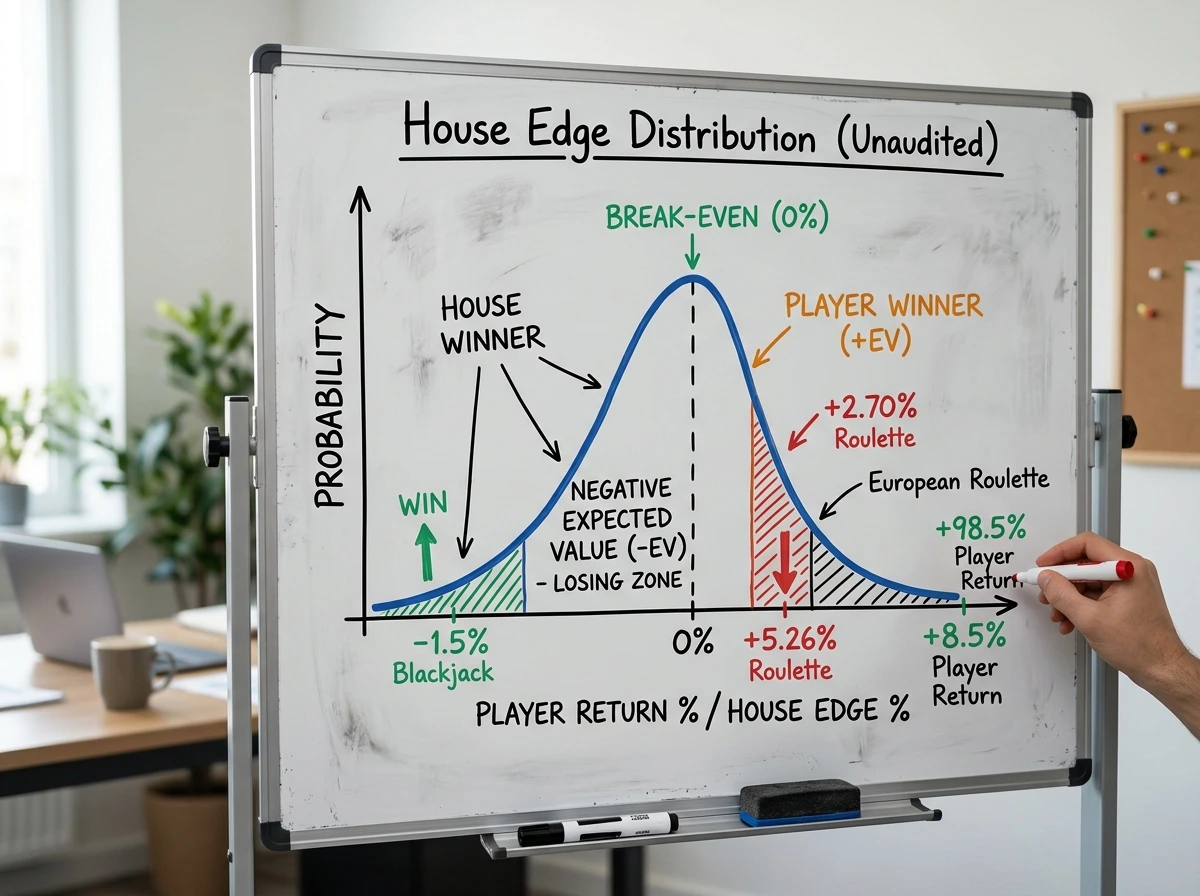
What it does not prove is that the overall crash point distribution is fair. The operator sets the house edge by configuring the probability distribution of crash points. A provably fair system confirms consistency — that the game follows its own rules — but not that those rules are balanced or independently audited. An operator could set a 5% house edge or a 15% house edge, and the provably fair mechanism would validate both equally. Without an independent audit of the underlying mathematics, «provably fair» proves process integrity, not fairness in the way most players understand the word.
At DGOJ-licensed operators, game mathematics must be independently tested and certified. The random number generators are audited, and the configured RTP is verified by accredited testing labs. Crash games at offshore casinos have no equivalent requirement. The provably fair label fills a trust gap, but it doesn’t fill it completely.
Manipulation Risks and Server-Side Control
Here’s where my scepticism sharpens. Even in a provably fair system, the operator controls the server-side seed — the starting value that determines the hash chain. If the operator generates a new hash chain, they effectively set a new sequence of crash points. A properly implemented system publishes the full hash chain in advance and doesn’t replace it. But verification requires technical literacy that most players don’t have, and the tools to check hash chains are provided by the operator themselves — creating a circular trust problem.
Outside provably fair systems, the risk is more straightforward. Some crash games run on operator-controlled servers with no cryptographic verification at all. The crash point is determined server-side, and the player has no way to verify whether the outcome was predetermined or adjusted in real time based on the betting pool. I’ve seen crash games where the advertised house edge was 3% but the observed crash distribution, over thousands of recorded rounds, suggested an effective edge closer to 8%. Without regulatory auditing, there’s no external check on these discrepancies.
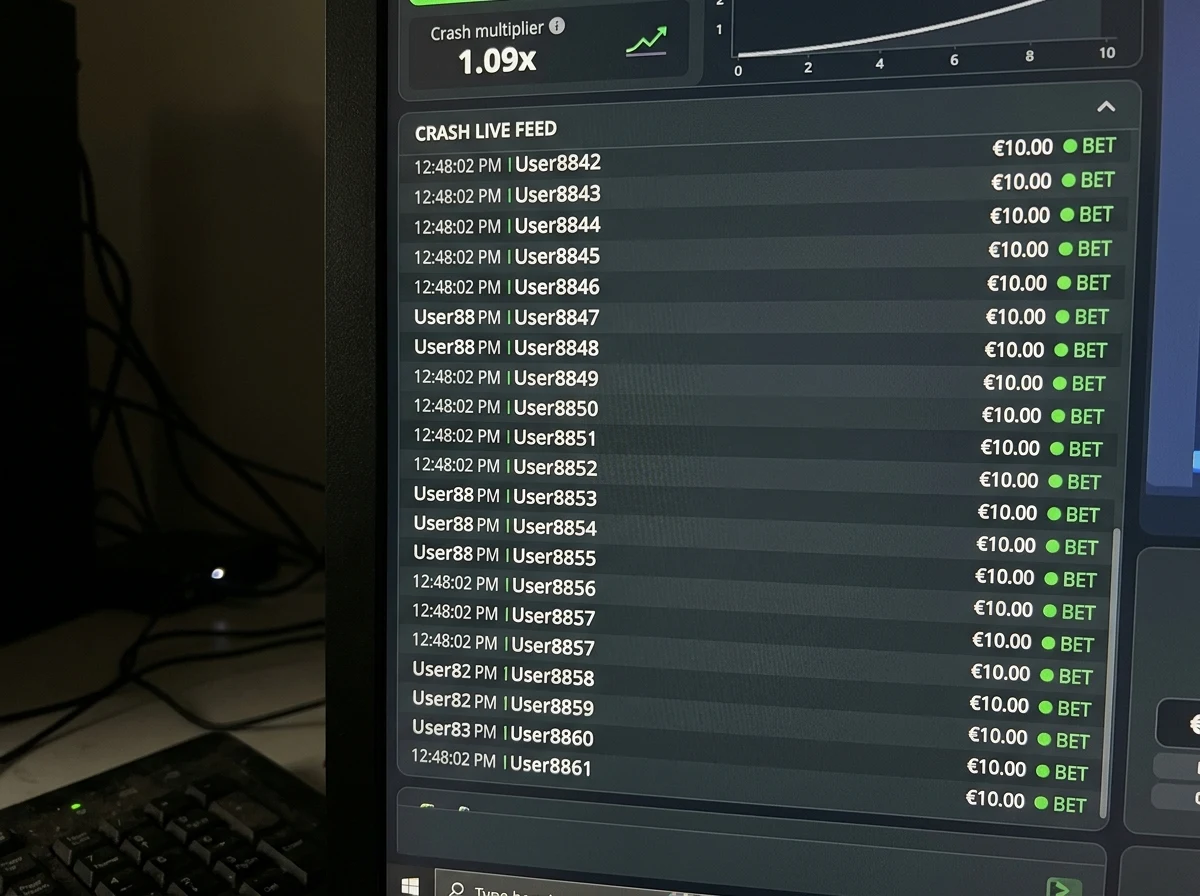
The social element of crash games — seeing other players’ bets and cash-out decisions in real time — adds another layer. Some operators use bot accounts to simulate player activity, creating the appearance of a busy, active game when the actual player count is lower. These bots can be programmed to cash out at specific multipliers, subtly influencing real players’ behaviour through social proof. Detecting bot activity from within the game interface is essentially impossible, and features banned in regulated markets don’t face this kind of scrutiny offshore.
The combination of these factors — unaudited house edges, operator-controlled seeds, and bot-influenced social dynamics — creates an environment where the player’s trust is based entirely on the operator’s reputation. In a regulated market, trust is backstopped by external audits, regulatory oversight, and enforceable standards. In the crash game ecosystem, trust is the operator’s brand and nothing else. For a game category growing as fast as crash games are, that gap between perceived and actual accountability is one of the most underappreciated risks in the offshore sector.
FAQ
Can the operator manipulate the crash point in a provably fair game?
In a correctly implemented provably fair system, the operator cannot change the crash point for a specific round after bets are placed because the outcome is pre-committed via a cryptographic hash. However, the operator controls the initial server seed that determines the entire sequence of crash points, and sets the probability distribution that defines the house edge. Provable fairness guarantees process consistency but does not guarantee that the house edge is fair or independently verified.
Why are crash games not available at DGOJ-licensed casinos?
Crash games fall outside the game categories currently approved under DGOJ regulation. The fast round frequency, high decision intensity, and absence of standardised testing frameworks for the crash mechanic mean that these games have not been certified for the Spanish regulated market. They remain available almost exclusively at offshore casinos operating under jurisdictions with less restrictive game approval processes.