

Contenido
Fifteen years is a long time in the gambling industry. When Spain’s Ley 13/2011 came into force, the iPhone 4 was still new and most online gambling happened on desktop browsers. The law created the DGOJ, established a licensing framework, and set the ground rules for a market that barely existed at the time. It’s done its job — but the cracks have been showing for years, and in 2026 the Spanish government is finally doing something about it.
The DGOJ opened a public consultation on amending the Gaming Regulation Law, with the submission window running until 22 June 2026. This isn’t a minor tweak. The consultation’s scope signals structural changes to how Spain regulates online gambling, how it enforces against unlicensed operators, and how it protects players in a market that looks nothing like it did in 2011. I’ve been following Spanish regulation closely since 2017, and this is the most significant legislative opening I’ve seen.
What Ley 13/2011 Currently Regulates
Before we talk about what might change, it helps to understand what the current law actually does — because most commentary I’ve read skips this entirely and jumps straight to speculation.
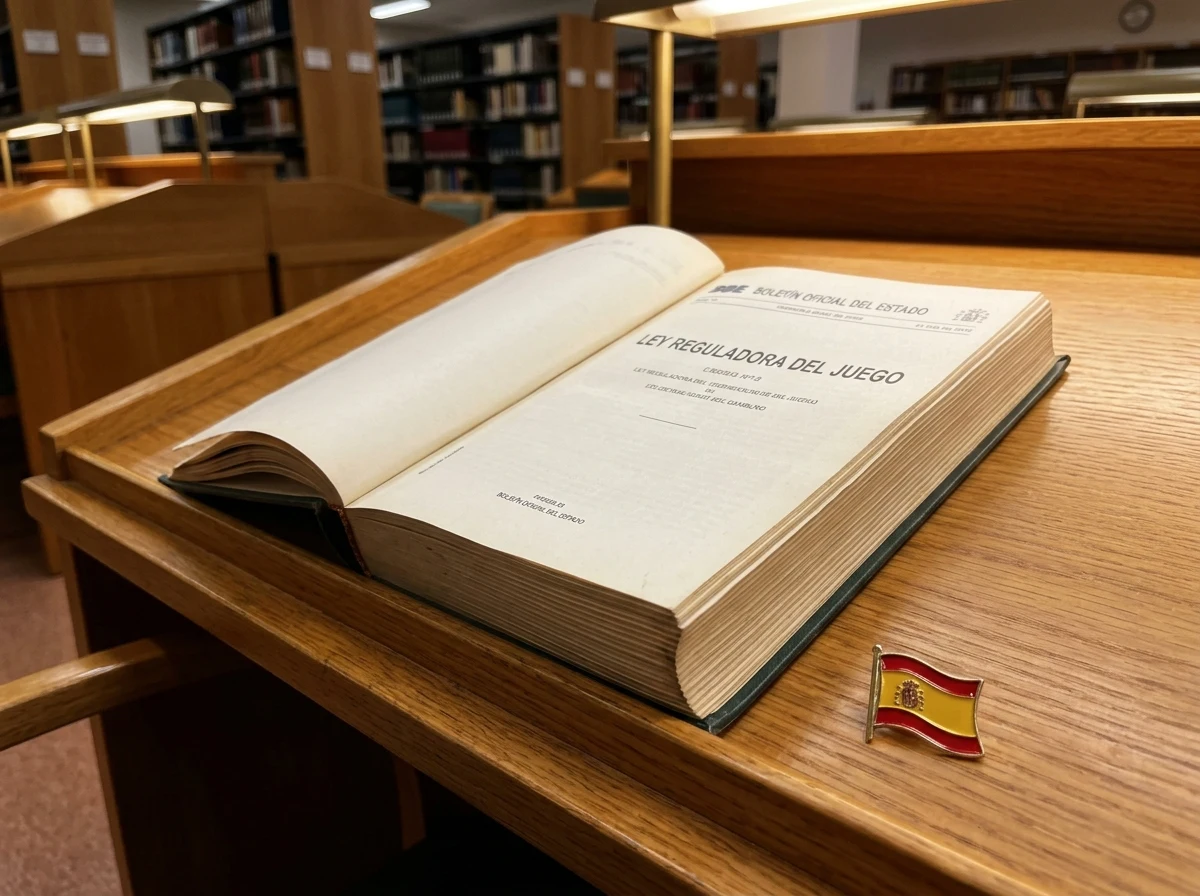
Ley 13/2011 established Spain as one of the first European countries to create a dedicated online gambling regulator. The DGOJ operates under the Ministry of Consumer Affairs and has authority over all online gambling activities targeting Spanish residents. Under this law, any operator wanting to offer gambling services to Spanish players needs a DGOJ licence. The law covers casino games, sports betting, poker, bingo, and contests — essentially every form of online gambling you can think of.
The framework includes advertising restrictions, mandatory player identity verification, deposit limits, and a national self-exclusion register called the RGIAJ. Operators must use a .es domain, segregate player funds, and submit to regular audits. It’s a comprehensive system — and for its era, it was progressive. Spain’s regulated online gambling GGR reached 1,700.55 million euros in 2025, growing 17% year-on-year, which tells you the licensed market is functioning.

The problem is that the market around the law has evolved dramatically. Cryptocurrency payments didn’t exist when the law was drafted. Mobile gambling now dominates player behaviour. The offshore sector has industrialised, with an estimated 231 million euros in unregulated gambling flowing through Spain annually. The enforcement tools the DGOJ inherited from 2011 — primarily domain blocking and fines — were designed for a smaller, simpler threat landscape. And the sanctions regime, while aggressive on paper (fines between 1 million and 50 million euros for unlicensed operation), struggles with cross-border enforcement against operators with no Spanish presence.
Scope of the 2026 Public Consultation
I got my hands on the consultation framework the week it launched, and three themes jumped out immediately: enforcement modernisation, player protection technology, and market structure.

On enforcement, the consultation explicitly addresses the gap between the DGOJ’s current blocking capabilities and the scale of the offshore market. The DGOJ blocked 229 portals covering 2,961 web pages in 2025 alone, but new domains appear faster than old ones get taken down. The consultation invites proposals for more dynamic enforcement mechanisms — think real-time monitoring rather than periodic sweeps — and greater cooperation with payment processors to cut off financial flows to unlicensed operators.
The player protection dimension ties directly into the DGOJ’s Safe Gambling Programme 2026-2030, which introduces centralised cross-platform deposit limits and mandatory risk-detection algorithms for all licensed operators. The consultation asks whether these measures should be written into the primary law rather than implemented through secondary regulation, which would make them harder to weaken or bypass in the future. This is significant because it would move responsible gambling from a policy priority to a legislative requirement.

Market structure questions are the most politically sensitive. The consultation touches on whether to expand the types of licences available — potentially creating space for new product categories or distribution models — and how to handle the advertising regime, which currently consumes 39% of the industry’s GGR. There’s also a question about whether Spain should pursue bilateral enforcement agreements with other jurisdictions, similar to the frameworks that exist between some Nordic countries.
What’s notably absent from the consultation is any suggestion of legalising currently unlicensed operators through a simplified licensing path. Spain appears committed to its fortress model: DGOJ licence or nothing. The reform is about strengthening the walls, not opening new gates. For operators currently weighing whether to pursue DGOJ licensing, this consultation signals that the window for operating in a grey zone will only narrow from here.
Expected Impact on Unlicensed Casino Access
Mikel Arana, the DGOJ’s Director General, framed the regulator’s position bluntly at ICE Barcelona: illegal gambling continues to be a direct threat to the credibility of the regulated market, consumer protection, and fair competition. That language tells you the reform’s direction — it’s not a softening, it’s a sharpening.
For the offshore casino market, a reformed Ley 13/2011 would mean several practical things. First, more effective blocking. If the law incorporates real-time domain monitoring and payment interdiction, the current whack-a-mole dynamic changes. Blocking 229 domains is one thing; cutting off payment processing across an entire category of operators is another. Second, the centralised deposit limits in the 2026-2030 Programme would reduce one of the key motivations players cite for going offshore — the absence of spending caps. If regulated casinos offer higher or more flexible limits under a new framework, some of the offshore pull weakens.

Third, and this is where it gets interesting for DGOJ enforcement strategy, the consultation opens the door to going after financial intermediaries rather than just operators. If Spanish banks and payment processors face regulatory consequences for facilitating transactions with unlicensed gambling sites, the enforcement lever shifts from trying to catch offshore operators to cutting off their revenue at the source. This approach has shown results in other jurisdictions — it doesn’t eliminate offshore access, but it adds friction that casual players won’t bother to overcome.
The timeline is uncertain. Public consultations in Spain don’t translate directly into legislative action — there’s a drafting phase, parliamentary process, and implementation period. Realistically, substantive changes from this consultation won’t take legal effect before late 2027 at the earliest. But the direction is clear, and operators — both licensed and unlicensed — are already adjusting their strategies in anticipation.
FAQ
When does the public consultation on Spain’s gambling law reform close?
The DGOJ’s public consultation on amending the Gaming Regulation Law (Ley 13/2011) is open until 22 June 2026. Submissions can be made through the DGOJ’s official consultation portal during this period.
Could the reform introduce new penalties for players who use unlicensed casinos?
The consultation’s published scope focuses on operator-side enforcement — blocking, sanctions, and payment interdiction — rather than player-side penalties. Spain’s current framework does not penalise players for accessing unlicensed sites, and there is no indication in the consultation materials that this approach will change. The reform targets operators and financial intermediaries, not individual players.
Consulta más información sobre casino sin licencia en nuestra página principal.
También te puede interesar el artículo sobre Cookie Policy | SINBANCA.